Healthcare Revenue Cycle Compliance
Billing/RCM

How to Enhance Denial Management for Mental Health Billing Services in 2023-24


Written by: James Smith   


Introduction   

In the complex world of healthcare billing, mental health services require a tailored approach due to the unique nature of the field. With the year 2023 underway, mental health billing services face challenges and opportunities. Among the essential aspects of this process is effective denial management. This article explores the key components of a robust denial management process and why it is particularly important for mental health billing services this year.

Understanding Denial Management

Denial management involves a series of strategic actions aimed at identifying, addressing, and mitigating claim denials from insurance providers. In the context of mental health billing, the significance of this process cannot be overstated. Claim denials can occur for various reasons, including incorrect documentation, coding errors, or issues related to insurance eligibility.

Key Components of Effective Denial Management

Proactive Eligibility Verification:

A fundamental component of denial management is proactive eligibility verification. Mental health billing services should rigorously verify the insurance coverage and eligibility of patients before providing services. This preemptive step helps prevent denials linked to coverage issues.

Accurate Documentation and Coding:

Precise and comprehensive documentation is critical. Mental health billing services must ensure that all services are accurately documented, and the corresponding diagnosis and procedure codes are correct. Errors in coding or incomplete information can lead to denials.

Timely Claims Submission:

Timeliness is paramount. Mental health billing services must adhere to the claims submission deadlines stipulated by insurance companies. Failing to submit claims promptly can result in automatic denials.

Thorough Denial Analysis:

When a denial is received, thorough analysis is necessary. Mental health billing services should pinpoint the specific reason for the denial, be it coding errors, lack of medical necessity, or other issues. This analysis is the compass for corrective actions.

Corrective Actions and Resubmission:

Based on the denial analysis, mental health billing services should take corrective actions to rectify the issues. This may involve revising documentation, appealing the denial, or resubmitting claims with necessary adjustments.

Denial Prevention:

The ideal approach to denial management is preventing denials in the first place. This can be achieved through ongoing staff training, staying updated on industry changes, and implementing quality assurance measures to minimize errors.

Significance of Denial Management in Mental Health Billing Services

Denial management holds a pivotal role in the realm of mental health billing services for various reasons:

Financial Stability:

Effective denial management ensures a steady cash flow for mental health providers. Promptly resolving denials guarantees they receive payment for their services, which is essential for the financial stability of their practices.

Compliance and Ethical Billing:

It enforces compliance with billing regulations and ethical standards. Mental health billing services must ensure that services billed for are genuinely provided and medically necessary, adhering to ethical billing practices.

Reduced Administrative Burden:

Outsourcing denial management to specialized services reduces the administrative burden on mental health providers. This allows them to focus on patient care, a critical aspect of their role.

Enhanced Patient Experience:

Swift resolution of denials and accurate billing practices enhance the patient experience. Patients are less likely to be surprised by unexpected bills or insurance-related issues, leading to greater satisfaction.

Long-Term Cost Savings:

By preventing denials and optimizing the billing process, mental health providers can achieve long-term cost savings and increased revenue. A more efficient process can contribute to sustainable financial growth.

Frequently Answers Questions

Q1: What is denial management in the context of medical billing?

A1: Denial management is the process of identifying, addressing, and preventing claim denials from insurance providers. It involves actions to rectify errors or issues that lead to claims being denied and to ensure accurate and timely reimbursement for healthcare services.

Q2: Why is denial management particularly important for mental health billing services in 2023?

A2: Mental health billing services face unique challenges related to diagnosis codes, medical necessity, and the need for thorough documentation. Effective denial management is crucial to maintain financial stability, ensure compliance, and enhance the patient experience.

Q3: What are some common reasons for claim denials in mental health billing?

A3: Claim denials in mental health billing can occur due to errors in documentation, coding mistakes, lack of medical necessity, insurance eligibility issues, and failure to meet claims submission deadlines, among others.

Q4: How can mental health billing services proactively prevent claim denials?

A4: Prevention can be achieved through proactive eligibility verification, ongoing staff training, staying updated on industry changes, and implementing quality assurance measures to minimize errors in documentation and coding.

Q5: What should mental health providers do when they receive a claim denial?

A5: When a claim is denied, mental health providers should conduct a thorough analysis to determine the specific reason for the denial. Once identified, corrective actions should be taken, such as revising documentation, appealing the denial, or resubmitting claims with necessary adjustments.

Q6: Can mental health billing services outsource denial management?

A6: Yes, many mental health billing services choose to outsource denial management to specialized billing companies. Outsourcing medical billing can help reduce the administrative burden on providers and ensure that denial management is handled by experts in the field.

Q7: How does effective denial management benefit mental health providers and patients?

A7: Effective denial management ensures a steady cash flow for providers, maintains compliance with billing regulations and ethical standards, reduces administrative burdens, enhances the patient experience by preventing billing surprises, and contributes to long-term cost savings and increased revenue.

Q8: What role does accurate documentation and coding play in denial management for mental health billing services?

A8: Accurate documentation and coding are crucial to prevent denials. Mistakes in these areas can lead to denials, and addressing such issues is a key part of the denial management process.

Q9: How can mental health billing services stay updated on industry changes and regulations in 2023?

A9: Staying updated can be achieved through continuous staff training, engaging with industry associations, subscribing to newsletters, and participating in webinars or conferences focused on mental health billing and healthcare regulations.

Q10: Are there specific software or tools that can aid in denial management for mental health billing services?

A10: There are various practice management and billing software solutions that offer denial management features, helping streamline the process. Choosing the right software and tools depends on the specific needs of the mental health billing service.

Conclusion

In conclusion, effective denial management is a linchpin of mental health billing services in 2023. It ensures financial stability, promotes compliance, and enhances the overall patient experience. Mental health billing services should be proactive in addressing denials, prioritize accuracy, and continually seek ways to prevent denials, ultimately benefiting both providers and their patients in this evolving landscape.

Author Bio:

James Smith is a dedicated writer and healthcare enthusiast with a passion for simplifying complex medical billing topics. As a valued member of the Zee Medical Billing, a best medical billing company in the United State, he is committed to helping healthcare professionals and organizations navigate the ever-evolving landscape of medical billing, ensuring that they receive accurate and timely reimbursements for their vital services.


 Copyright © 2023 American Institute of Healthcare Compliance All Rights Reserved 

Read More
Healthcare Revenue Cycle Compliance
Billing/RCM

Addressing Revenue Cycle Labor Shortage With Technology and Outsourcing

Written by: Melvin Miller, COO


The labor shortage is currently one of the biggest issues across industries. Be it restaurants, hospitals, retail, hospitality, and manufacturing – take any sector and you will find that this is perhaps the #1 problem operations managers are facing.


In healthcare, the labor shortage is not limited to clinical roles but extends across administrative functions. Front-office staff, billers, coders, accounts receivable, denial management, and physician credentialing experts are in short supply.


If you look at the revenue cycle, lack of timely filing and follow-ups can increase denials and result in delayed cashflows. When your revenue cycle faces a staffing shortage for core functions, you tend to ignore the optimization functions such as quality assurance and underpayment reviews, which can unlock additional revenue opportunities.


The staffing shortage is aggravating problems for the hospitals, which were impacted already by the pandemic. Over the years, we have seen declining reimbursements necessitating revenue cycle operations to deliver the best financial outcomes, which requires deep healthcare and reimbursement process expertise.


With expert revenue cycle team members already in short supply and the mandate to get all employees vaccinated for COVID-19, hospitals and healthcare systems are losing employees due to resignations and terminations. Due to the shortage of clinical and non-clinical staff, many hospitals are on the verge of closing; in fact, many rural facilities have closed already. Further, the shortage has resulted in a fight for talent, which led to increased salaries and the cost of operations.


In this blog, we look at some of the strategies revenue cycle CFOs are deploying.

  • Cloud-based IT infrastructure

With the need to operate remotely, IT leaders are tasked with making mission-critical EHR and RCM platforms available anytime, anywhere. In most physician practices, the adoption of SaaS-based EMR/RCM solutions is increasing.

  • Process automation

Within both clinical and non-clinical revenue cycle solutions, the application of machine learning, AI, and RPA technologies are enabling revenue cycle leaders to combat the staffing shortage to some degree. Technology and automation can move routine, repeatable, labor-intensive tasks to the machines and reduce manual effort. For instance, claims status automation and the adoption of portals reduce call center workloads. When you free up people from mundane activities, they can focus on higher-value activities and have better job satisfaction.

  • Operational rigor

While all revenue cycle leaders talk about managing tighter operations, few have gone on to invest time and money in implementing workflow systems that help them measure, monitor, and manage the productivity of each employee. Transactional productivity improvements will, in the short term, lead to gains in financial outcomes.

  • Analytics for sustainable transformation

Usually, revenue cycle success boils down to strategic A/R management, i.e., understanding the patterns in denied claims, addressing root causes, strategic touches to claims in higher revenue brackets, and not allowing claims to fall into longer aging buckets. Revenue cycle analytics and adoption of industry-standard reporting can help RCM managers create the focus.

  • Outsourcing

Perhaps the #1 strategy that organizations are looking at is outsourcing, which gives them access to trained, certified labor across the nation. And with offshoring, you also get the benefits of cheaper cost structures. With the outsourcing and offshoring market now nearly two decades old, you can find service providers who have invested in process expertise and technology to help you get access to best-of-the-breed practices.

  • Optimizing costs to collect requires simultaneous implementation of pervasive change strategies

Across the revenue cycle operations, the questions that leaders need to ask are:


o What can you automate?


o What technologies do you need to invest in - workflow automation, analytics,
front-end tech?


o Where will you find the money to invest in new-age technology?


o Does this function need to be done onshore, or can you offshore it? 

  • Cash is king. Leaving revenue on the table is a crime.

Faster cash flow cycles are critical to the survival of healthcare organizations. Address the problems such as revenue leakage and front-end processes sustainably to streamline operations.

  • Change the job content for your employees

Accelerating the adoption of technology and outsourcing can shift the focus of your employees to strategic tasks. The change in job content makes them feel empowered to impact the organization’s revenue cycle outcome, which is more satisfying.

  • Don’t just outsource. Choose your vendor partner well.

Plan along with your vendors, transition and stabilize operations, and then move the goal post for the vendor every quarter.

While you can take the short-term to address your revenue cycle issues, it is time for revenue cycle leaders to implement sustainable solutions. The labor shortage is not going away quickly, and reimbursements will continue to decline. Technology, operational rigor, and outsourcing are the only options you have. Choose well, plan well, and execute in style.

Additional Resources:

  • Medical Billing Wholesalers - https://www.medicalbillingwholesalers.com

    _________________________________________________________

    Melvin Miller is an experienced Chief Operating Officer with a demonstrated history of working in the healthcare industry for over 15 years, Satish, a.k.a. Melvin, has experience in team building, business development, Healthcare Information Technology (HIT), revenue cycle process training, US. Health Insurance Portability and Accountability Act (HIPAA), and Healthcare Management.
Read More
Healthcare Revenue Cycle Compliance
Billing/RCM

Key Revenue Cycle Trends for 2022 and Beyond

Written by: Melvin Miller, COO


Tech, investments, efficiency, patient experience, underpayment recovery, and coding automation are some of the themes that will drive the revenue cycle market momentum in 2022 and beyond. Coming at the back-end of a long period of adversity due to COVID-19 and an already challenging economic environment for hospitals and healthcare systems, we see a new wave of consolidation, invention, and innovation. In this paper, we discuss some of the trends experienced in health care.


TIGHTENING PROFIT MARGINS – A PANDEMIC RAVAGED REVENUE CYCLE TO BOTTOM OUT.


With hospitals operating on extremely tight margins, projecting cash flow and the ability to extract the maximum out of the revenue cycle is more critical than ever before. This will drive key technology and process innovation as revenue cycle leaders and managers strive to improve business outcomes.


Now, let’s look at the broad trends in each of the major revenue cycle processes.


Patient Access and Experience


Patient experience is now one of the key issues impacting the healthcare industry. There is a huge information deficit in the area of patient payments.


Patients question “How much should I pay from my pocket?” The answer has been surprisingly difficult to find. Patients must get quick and easy access to information about services performed and corresponding charges; the amount expected to be paid by their insurance company; and the out-of-pocket expenses they are expected to bear. It is important to include the aspect of the No Surprises Act, which complicates the situation for both providers and patients.


We anticipate patient access and experience to improve with new technologies that can project the costs they need to bear, improved omnichannel information availability, and improved payment plans. Patient financial services will go through a much-needed overhaul.


Prior-Authorization and Eligibility Verification


While great tech exists for information interchange, prior authorization and eligibility verification tech adoption have lagged because of a lack of standardized documentation and information exchange protocols. With clearinghouses now modernizing, there is new hope for API-driven information exchanges.


Autonomous Coding


Automation tech is seeing increasing adoption, and there is a general perception that coding, billing, and accounts receivable problems will be solved through automation. Artificial Intelligence, Machine Learning, and Robotic Process Automation technologies provide great promise to lower labor costs. Medical coding is becoming data-driven and autonomous with improved standardization through ICD-11 and a better combination of virtual scribing, Universal Medical Language Systems (UMLS), OCR, and natural language processing (NLP). While these are still early days, coding tech is yet to prove effective in finding discharges not fully coded (DNFC) and arresting revenue leakage.


A/R, Denial Management, and Appeals Filing

Accounts Receivable (A/R) status has moved from calls to portals. We see increasing relevance for chatbots using conversational artificial intelligence (AI) in A/R and denial management filing. Data structures can now power customized appeals filing as well.

Focus on the Front-End

Most revenue cycle leaders agree that they need to solve revenue cycle issues in the front-end rather than elongate the cycle and wait to address them in the back end. They recognize that they need to link prior authorization, revenue integrity, clinical documentation improvement, and denial management to accelerate their revenue cycle. The ability to quickly identify denial issues, determine root causes, and develop solutions to reduce these denials through an iterative model that focuses on denial prevention is considered the key to addressing revenue cycle issues.

Underpayment and Analytics

The Hospital revenue cycle is fraught with underpayment issues. Contract analysis and underpayment identification can help arrest underpayments. As the shift to more branded, national healthcare practices happens, performance analytics becomes a critical business function. Practice-specific analytics using standard measures and Key Performance Indicators or KPIs will enable accurate views of performance and drive corrective action.

Unprecedented Financial Activity – Private Equity (PE), IPOs, Mega-mergers, and More

“It’s like Woodstock,” as some revenue cycle dealmakers are saying. The role of private equity in healthcare, in general, and the revenue cycle business, in particular, has increased to an unprecedented level.

  • Entry of the big boys. The big boys, i.e., the large PE firms have made strategic investments in revenue cycle assets.
  • Technology-led investments. Some of the themes that PE firms are investing in include focused revenue cycle service providers and niche technology companies such as autonomous coding, patient experience, prior authorization, and large-scale offshore providers.
  • Investments in revenue cycle aggregators. It seems like if a company’s resume says revenue cycle, it is likely to attract many valuations. Further, larger companies choose to hit the primary market through an initial public offering. We are seeing increasing consolidation of revenue cycle service providers as well.
  • Provider side consolidation. There is an increasing amount of investment in consolidation on the provider side. The push to provide a branded healthcare experience through nationwide chains is driving investments in areas such as urgent care, behavioral/mental health, wellness-focused treatments, home healthcare franchises, etc.

In 2022, we anticipate the continuance of these trends and mega-mergers will be more of a norm than an aberration.

Telehealth Adoption

Spurred on by the pandemic, telehealth adoption is increasing. Not only does this mean a lower cost of care, but it also requires the adoption of new processes for patient monitoring and managing the revenue cycle.

Remote Working

The COVID-19 necessitated revenue cycle team members to adopt work-from-home models. It also required operations managers to be flexible and adopt technologies to monitor revenue cycle performance. We anticipate that hospitals and healthcare systems will look at remote working as the new normal and encourage a significant percentage of their workforce to work remotely.

Labor Shortage and Outsourcing

There is an acute shortage of qualified revenue cycle staff. Many community hospitals are concerned about the community’s response to outsourcing and offshoring strategies they adopt. At this time of rising hospital expenses and reducing revenues due to declining reimbursements, outsourcing, offshoring, and automation can help them contain costs and sustain profitability. If using a U.S. based company that offshores the majority of their work, have you checked with legal counsel regarding how this type of business associate can be held accountable under U.S. laws (such as HIPAA, False Claims Act, etc.)

Conclusion

There has never been a better time to be in healthcare – and these are the most challenging times as well. Both in terms of economic activity and innovation, 2022 is likely to set a scorching pace. Whether you are a healthcare system, revenue cycle services provider, or technology solutions provider, this year will force you to think innovatively, build new delivery frameworks, and create the revenue cycle of the future.

Additional Resources:

_________________________________________________________

Melvin Miller is an experienced Chief Operating Officer with a demonstrated history of working in the healthcare industry for over 15 years, Satish, a.k.a. Melvin, has experience in team building, business development, Healthcare Information Technology (HIT), revenue cycle process training, US. Health Insurance Portability and Accountability Act (HIPAA), and Healthcare Management.
Read More
Auditing, Managing Denials Is Important to Good A/R Hygiene
Auditing

Part 3: Audit Documentation to Avoid Potential Appeal Consequences

Written by: AIHC Blogger


This article provides educational information related to mitigating the risk of an unwarranted payer investigation. Only appeal claims when you have evidence and supporting documentation to substantiate your right to payment. This is the final article in a 3-part series on denials and appeals management. Read Part 1 entitled “Managing Denials Is Important to Good A/R Hygiene” posted March 22, 2022, and Part 2 entitled “Understanding How Payers Deny Claims.”


Audit Coding, Billing and Documentation for Accuracy


Insurance carriers and government contractors have the authority to review any claims at any time. Due to the huge volume of claims payers receive to process, deny and pay, they have implemented various methods to track providers to detect potential waste, fraud and/or abuse.


Providers may take documentation “short cuts” or feel overwhelmed with implementation of a new EMR (electronic medical record) system and clone or make documentation errors. It is important to detect any problematic areas prior to filing an appeal. 


Lack of detailed supporting documentation submitted with an appeal can not only result in another denial, but also in “flagging” your practice as being high-risk on the spectrum of potential fraud and/or abuse. It can result in a situation where insurance opens an investigation or decides to initiate periodic audits on your claims and records. When you believe the payer is making the mistake, push back by exhausting all appeal rights allowed. If the payer, such as Medicare, performs an extrapolation, reducing each overpayment dollar through appeal can mean thousands less to pay back.


Utilize the information provided in the Part 2 article, such as ensuring the claim meets Medical Unlikely Edits, bundling, diagnosis and medical necessity guidelines. All modifiers should be appropriately appended and supported in the medical record. A great free modifier resource to share with you is the CMS Medicare Administrative Contractor (MAC) “WPS” learning center with on-demand training materials. Click here for the WPS modifier page (choose a region, the website will take you to the page).


Place of Service (POS) can be a “trigger” for an investigation. If the claim is coded POS 11 for the office, reimbursement can be higher than if the same service was performed at the hospital by the provider. Audit the POS to ensure this was coded correctly on the claim. A complete national POS code set and instructions are provided in CMS Internet-only Manual (IOM) Publication 100-04, Chapter 26, Section 10.5 at:  

https://www.cms.gov/regulations-and-guidance/guidance/manuals/downloads/clm104c26pdf.pdf


Is the date of service (DOS) correct? When the medical record date doesn’t match the date filed on the claim, you may have a difficult time arguing an appeal. Payers always require documentation for the date of service filed (and paid) on the claim. When the DOS is incorrect, accept the denial. If you have not passed the timely filing deadline, re-file the claim with the correct DOS.


Audit to ensure your organization has no excluded individuals employed


An example of a case settled in 2022 is Windham Eye Group, an ophthalmology practice paying $192,000 for employing an excluded practice administrator. Please make sure your organization routinely screens employees to ensure none are on the OIG exclusions list. Prior to appealing a Medicare, Medicaid, TriCare or other Federal Program claim, you should verify that your organization is compliant in this area (click here). 


Evidence of Medical Necessity


Medical necessity includes frequency, duration, previous conservative treatment (that failed) and other factors. However, it also includes documentation of a supporting diagnosis.


The diagnosis coding on the claim is one of the first items insurance will review to qualify the claim as being “medically necessary.” Once the diagnosis coding passes through the insurance company edits, additional edits will then be performed against medical necessity criteria. 


Diagnosis codes are an important compliance aspect of reporting medical necessity on the claim. They are also a large contributing factor for potential fraud and abuse when documentation does not support the diagnoses reported. Auditing the diagnoses on the claim to documentation is a critical review step to determine whether the claim should be appealed.

  • Diagnoses should be sequenced according to coding guidelines.
  • Each line-item on the claim should be linked to the appropriate procedure code.
  • Audit the code to ensure all characters are accurate.
  • Each condition reported on the claim must be documented in the patient’s chart.
  • Verify that the primary diagnosis is listed as “medically necessary” for the treatment provided.

Detect a Problem?


During the course of auditing or reviewing documents related to a denied claim, you may identify situations where further investigation is necessary. You may state it is simply a billing error. Errors made over and over in high volume or high dollar amounts will be interpreted as more than a simple billing mistake by payers. 

  • Make careful consideration before appealing denials found on an investigational probe. 

Obtaining legal advice before proceeding with an appeal may be necessary under certain circumstances. 


Carrier SIU Situations


Insurance carriers have departments called Special Investigation Units or “SIU” with trained professionals carefully reviewing allegations of suspected fraud and abuse. 


When a probe or investigation is initiated by a payer in writing or in-person, it is likely the investigators have already been speaking with your billing staff and patients to gather information to establish a case against you.


Can the investigators “get it wrong”?  They can, sometimes!


There are times when investigators believe the situation is intentional (fraud) when the problem actually is being caused by lack of internal controls, auditing and monitoring by the provider. This allows errors to continue for prolonged periods of time.  


When your office receives the results of the SIU (carriers) probe, the letter will provide guidance regarding ability to appeal. If you are given the option to appeal, have evidence of a strong argument to support that these claims should be paid. If you can’t meet the deadline to appeal, request an extension to buy more time to audit and properly prepare your appeal argument. 


If your organization has a Compliance Officer and/or Certified Healthcare Auditor, you may want to bring concerning situations to his/her attention. Never file an appeal when you believe documentation may be evidence of fraud or abuse. You may need assistance from someone more highly trained in this area to determine this. If in doubt, check it out.


When speaking with your provider, Compliance Officer, Auditor or an attorney, the “short” list of rules and regulations which apply to medical coding, documentation and billing are listed below. 

  • False Claims Act (FCA);
  • Anti-Kickback Statute (AKS);
  • Physician Self-Referral Law (Stark Law);
  • Social Security Act; and
  • United States Criminal Code.

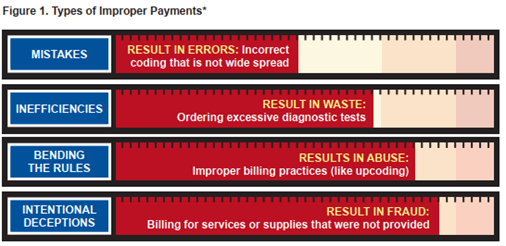
The difference between “fraud” and “abuse” depends on specific facts, circumstances, intent, and knowledge. Examples of abuse can include such things as:

  • Billing for unnecessary medical services (lack of medical necessity);
  • Charging excessively for services or supplies;
  • Misusing codes on a claim, such as upcoding or unbundling codes;

According to the Medicare Integrity Program, activities which target various causes of improper payments are items such as those in the chart below.


The government's primary civil tool for addressing healthcare fraud is the False Claims Act (FCA).

  • Most FCA cases are resolved through settlement agreements in which the government alleges fraudulent conduct and the settling parties do not admit liability.
  • Based on the information it gathers in a FCA case, the Office of Inspector General (OIG) assesses the future trustworthiness of the settling parties (which can be individuals or entities) for purposes of deciding whether to exclude them from the Federal healthcare programs or take other action.

The OIG's efforts to curb fraud include:

  • Conducting criminal, civil, and administrative investigations of fraud and misconduct related to HHS programs, operations and beneficiaries;
  • Using state-of-the-art tools and technology in investigations and audits around the country;
  • Imposing program exclusions and civil monetary penalties on health care providers because of criminal conduct such as fraud or other wrongdoing;
  • Negotiating global settlements in cases arising under the civil False Claims Act, developing and monitoring corporate integrity agreements, and developing compliance program guidance.

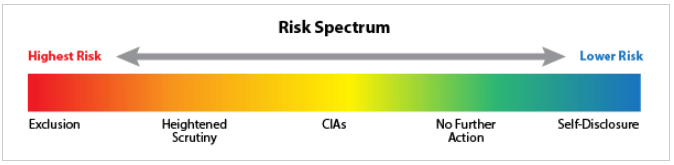
Because OIG's assessment of the risk posed by a FCA defendant may be relevant to various stakeholders, including patients, family members, and healthcare industry professionals, the OIG makes information public about where a FCA defendant falls on the risk spectrum.


The five risk categories on the spectrum are defined below:


Highest Risk:  Exclusion

  • Parties that OIG determines present the highest risk of fraud will be excluded from Federal healthcare programs to protect those programs and their beneficiaries. Excluded individuals and entities are listed in OIG's Exclusions Database.

High-Risk:  Heightened Scrutiny

  • Parties are in the High-Risk category because they pose a significant risk to Federal healthcare programs and beneficiaries. This is because, although OIG determined that these parties needed additional oversight, they refused to enter Corporate Integrity Agreements (CIAs) sufficient to protect Federal healthcare programs. Parties in the High-Risk category that reached settlements since on October 1, 2018, or later are listed here.

Medium risk:  CIAs or Corporate Integrity Agreements

  • Healthcare providers and other entities in the Medium Risk category have signed CIAs with OIG to settle investigations involving Federal healthcare programs. Under these agreements, parties promise to fulfill various obligations in exchange for continuing to participate in the programs.

Lower Risk:  No Further Action

  • The OIG sometimes concludes that parties present a relatively low risk to Federal healthcare programs. As a result, OIG is not seeking to exclude them from those programs or require a CIA. OIG's cases against these parties are closed without evaluating the effectiveness of any efforts the parties have made to ensure future compliance with Federal healthcare program requirements.

Low Risk:  Self-Disclosure

  • A party may disclose evidence of potential fraud related to Federal healthcare programs to OIG. The OIG believes that doing so in good faith and cooperating with OIG's review and resolution process generally demonstrates that the party has an effective compliance program. OIG works to resolve such cases faster, for lower settlement amounts, and with a release from potential exclusion with no CIA or other requirements. More information about OIG's self-disclosure protocol – click here.

This ends Part 3 for the denials and appeals article series. There is so much more to share with you, however, as you can see, filing an appeal involves various considerations and skill sets. Register, train and certify in Appeals Management - Online, On-Demand! 


Read More
Healthcare Revenue Cycle Compliance
Billing/RCM

Part 2: Understanding How Payers Deny Claims

Written by: AIHC Blogger


This article provides educational information related to fighting unreasonable denials by working through a complex payer appeals process. This information is not all-inclusive and the article is a truncated version of Lesson 3 from our Certified Outpatient Clinical Appeals Specialist (COCASSM) training program. The complex Medicare appeals process is used to demonstrate the importance of appealing claims denied in an audit. Make sure to read Part 1: Managing Denials is Important to Good A/R Hygiene.


Audited by a payer?  


Is your organization under a payer audit? Fight back by appealing unreasonable denials. But first, learn more about how a complex payer audit system works. 


Understanding how a payer reviews and makes a payment determination will strengthen your ability to argue and defend your claim upon appeal. The learning objective of this lesson is to help you become familiar with the Medicare Claims Review Program (MCRP). This program monitors inappropriate payments. Other payers mirror Medicare’s program.


What is an “improper” payment?


These are reimbursements that should not have been made or that were made in incorrect amounts. According to the U.S. Government Accountability Office (GAO), improper payments have been estimated to total almost $1.7 trillion government-wide from fiscal years 2003 through 2019. Auditing and denying claims after the claims have been paid is “big money” for the government. 

  • For example, the GAO states that they identified about $77.6 billion in financial benefits in fiscal year 2020—a return of about $114 for every $1 invested.
  • They also identified 1,332 other benefits that led to program and operational improvements across the government.
  • Most recently, GAO has been evaluating the largest response to a national emergency in US history, the $2.6 trillion COVID-19 response legislation, and making recommendations about how to improve its effectiveness in dealing with public health issues and the economy.

The Medicare Fee-for-Service Compliance programs prevent, reduce, and measure improper payments in FFS Medicare through medical review. A number of programs are provided to educate and support Medicare providers in understanding and applying Medicare FFS policies while reducing provider burden.


A Medicare contractor may use any relevant information they deem necessary to make a prepayment or post-payment claim review determination. This includes any documentation submitted with the claim or through an additional documentation request.


CMS' Center for Program Integrity (CPI) oversees Medicare medical review contractors. CPI conducts contractor oversight activities such as:

  • Providing broad direction on medical review policy
  • Reviewing and approving Medicare contractors' annual medical review strategies
  • Facilitating Medicare contractors' implementation of recently enacted Medicare legislation
  • Facilitating compliance with current regulations
  • Ensuring Medicare contractors' performance of CMS operating instructions
  • Conducting continuous monitoring and evaluation of Medicare Contractors' performance in accord with CMS program instructions as well as contractors' strategies and goals
  • Providing ongoing feedback and consultation to contractors regarding Medicare program and medical review issues

The Medicare Claims Review Program, or “MCRP,” involves both technical and clinical categories of denials performed by CMS contractors. It is a complex system, perfect to use as a teaching example! There are two categories of denials:


1. Technical Denial & Rejection
     • This topic has been covered in previous lessons, but let’s review again!

o A technical denial is an error made when filing the claim, such as lack of appropriate coordination of benefits and filing to secondary insurance first. When a critical error gets through the scrubber, the insurance payer software may reject the claim due an error. Correcting these types of errors quickly and refiling the claim typically results in payment. These claims often “fall through the cracks” and can be suspended. Lack of tending to rejected claims can cause huge revenue loss for your organization.


2. Clinical Denial
    • A clinical denial is the denial of payment by an insurance payor on the basis of medical necessity, length of stay or level of care. Special review of documentation, payer guidelines and often appealing the claim is required to obtain payment.

o When a payer sends an RFI (Request for Information), the payer is auditing the claim data against medical record documentation.
o Untimely response to the RFI will result in a denial.
o Sending inappropriate or wrong information to the payer will result in a denial.
o These types of denials can potentially trigger a larger audit, a probe, or an abuse or fraud investigation of your organization


CMS estimates the Medicare FFS improper payment rate through the Comprehensive Error Rate Testing (CERT) program. Each year, the CERT program reviews a statistically valid stratified random sample of Medicare FFS claims to determine if they were paid properly under Medicare coverage, coding, and payment rules.


Audits or claim reviews are conducted either prepayment or post-payment of the claim and typically fall under one of these categories:

  • Compliance to bundling edits (Medicare’s National Correct Coding Initiative or NCCI Edits)
  • Medically Unlikely Edits or “MUEs”
  • Comprehensive Error Rate Testing (CERT)
  • Recovery Audit Program
  • Medical Reviews (MRs)

National Correct Coding Initiative (NCCI) Edits


CMS developed the National Correct Coding Initiative (NCCI) to promote national correct coding methodologies and to control improper coding leading to inappropriate payment in Part B claims. The Centers for Medicare & Medicaid Services (CMS) owns the NCCI program and is responsible for all decisions regarding its contents.


Most payers either use the NCCI edits or have a similar bundling edit system in place. Basically, bundling edits review codes on a claim to determine whether the items can be filed and paid separately or bundled into one code.


The claims scrubber software within your practice management system will analyze the codes on the claim and compare the information to the NCCI edits. Items that should be bundled will be suspended for further review. Your office cannot bill a patient for a service denied due to denied claims based on the NCCI edits.


These edits are updated at least quarterly and revised in your practice management system through updates to the software. Information about the National Correct Coding Initiative (NCCI) can be found in the Internet-Only Manual, Publication 100-04, Section 20.9 of Chapter 23 of the Medicare Claims Processing Manual.


When appealing NCCI edit denials, it is important to review the claim to ensure the appropriate modifier has been used. If not, review the documentation and appropriately append the modifier to the line item on the claim and submit your appeal with the documentation. 


Modifiers allowed with the National Correct Coding Initiative (NCCI) procedure to procedure (PTP) edit that can be used under appropriate clinical circumstances to bypass an NCCI PTP edit include:

  • Anatomic modifiers: E1-E4, FA, F1-F9, TA, T1-T9, LT, RT, LC, LD, RC, LM, RI
  • Global surgery modifiers: 24, 25, 57, 58, 78, 79
  • Other modifiers: 27, 59, 91, XE, XS, XP, XU

NOTE:  Overuse of such modifiers just to get claims passed through the edits for payment can trigger an audit, probe or investigation. 


Medically Unlikely Edit (MUE)


This audit feature analyzes a claim to determine if the appropriate number of units are being reported per line item. It is a unit of service edit for a Healthcare Common Procedure Coding System (HCPCS)/Current Procedural Terminology (CPT) code for services rendered by a single provider/supplier to a single beneficiary on the same date of service (DOS).


The ideal MUE is the maximum unit of service that would be reported for a HCPCS/CPT code on the vast majority of appropriately reported claims. 


MUEs are designed to reduce errors due to clerical entries and incorrect coding. MUEs are adjudicated either as claim line edits or DOS edits.

  • If the MUE is a claim line edit, each line of a claim is adjudicated against the MUE value for the Healthcare Common Procedure Coding System (HCPCS)/Current Procedural Terminology (CPT) code on that claim line.
  • If the UOS on the claim line exceeds the MUE value, all UOS for that claim line are denied. If the same code is reported on more than one line of a claim by using CPT modifiers, each line of the claim is adjudicated separately against the MUE value of the code on that claim line.

For Medically Unlikely Edits (MUEs) that are adjudicated as claim line edits, each line of a claim is adjudicated separately against the MUE value for the code on that line. The appropriate use of Healthcare Common Procedure Coding System (HCPCS)/Current Procedural Terminology (CPT) modifiers to report the same code on separate lines of a claim will enable a provider/supplier to report medically reasonable and necessary UOS in excess of an MUE value.


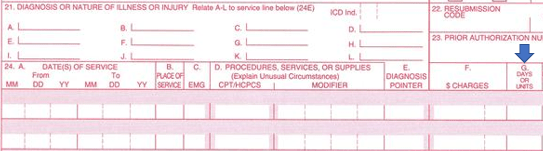
24.G is the field on the 1500 claim being audited for MUE compliance:


These edits are updated at least quarterly and revised in your practice management system through updates to the software. 


Comprehensive Error Rate Testing (CERT) Program


CERT contractors perform a complex medical review of the claim and the supporting documentation to determine whether the claim was paid appropriately according to Medicare coverage, payment, coding, and billing rules.


CMS calculates a national Medicare Fee-For-Service (FFS) improper payment rate and improper payment rates by service type to accurately measure the performance of the MACs and gain insight into the causes of errors. CMS publishes the results of these reviews annually.


The Medicare FFS Improper Payment Rate is a good indicator of how claim errors in the Medicare FFS Program impact the Medicare Trust Fund. CERT errors are listed by the following categories:


The Recovery Audit Program


Most hospitals and clinics are familiar with the “RAC” or Recovery Audit Contractor program – now referred to as the “Recovery Audit Program” by CMS.


RAC's review claims on a post-payment basis by auditing past Medicare FFS claim data for potential overpayments or underpayments and reviewing medical records when necessary to make appropriate determinations. When performing these reviews, Recovery Auditors follow Medicare regulations, billing instructions, National Coverage Determinations (NCDs), coverage provisions, and the respective MAC’s Local Coverage Determinations (LCDs). Recovery Auditors do not develop or apply their own coverage, payment, or billing policies.


In general, Recovery Auditors do not review a claim previously reviewed by another entity. Recovery Auditors analyze claim data using their proprietary software to identify claims that clearly or likely contain improper payments.


Medical Review Audits


Medical reviews identify errors through claims analysis and/or medical record review activities. Contractors use this information to help ensure they provide proper Medicare payments (and recover any improper payments if the claim was already paid). Contractors also provide education to help ensure future compliance.


A Medicare contractor may use any relevant information they deem necessary to make a prepayment or post-payment claim review determination. This includes any documentation submitted with the claim or through an additional documentation request. 


One of the first items reviewed is a valid authentication or signature. Next, auditors typically review documentation for medical necessity; information to support units, laterality, diagnosis coding and supporting documentation such as signed orders or plan of care.


Learn more about clean claims, prompt pay laws, fighting denials based on medical necessity, appealing ERISA denials, the Medicare appeals process, and how to create an effective denials and appeals program – click here and become an Outpatient Clinical Appeals Specialist. Click Here to see if we have any upcoming classroom training camps!

Read More
Healthcare Revenue Cycle Compliance
Billing/RCM

Part 1: Managing Denials Is Important to Good A/R Hygiene

Written by: AIHC Blogger


Too many denied claims to manage? Practicing good revenue cycle management “hygiene” is important – but most don’t know where to start.


This article provides a basic overview of the importance of improving your appeals process to get denials overturned as it relates to overall revenue cycle management. This information is not all-inclusive and is for educational purposes only. We recommend formal training in denials and appeals management and encourage medical billing companies and practice managers gain better insight into accounts receivable (A/R) management through online training and certification.


Revenue cycle management includes tracking claims, making sure payment is received, and following up on denied claims to maximize revenue generation. Several metrics can help you determine whether your revenue management cycle processes are efficient and effective. The first metric is days in accounts receivable (A/R). Days in A/R refers to the average number of days it takes a practice to collect payments due. The lower the number, the faster the practice is obtaining payment, on average.


When a large number of denials are due to a single payer and in a short amount of time, conduct analysis of the situation quickly. Why? This could be an investigation initiated by the payer and may warrant additional assistance to evaluate. You need to know there is a problem and understand the underlying cause before you can resolve it.


According to the American Academy of Family Physicians (AAFP), a 5% to 10% denial rate is the industry average, but keeping the denial rate below 5% is more desirable. Automated processes can help ensure your practice has lower denial rates and healthy cash flow. For most practices, days in A/R should stay below 50 days at minimum; however, 30 to 40 days is preferable and achievable when your revenue cycle team works smart!


Know Your “Days in A/R”


When claims are filed but not paid, days in accounts receivable (A/R) will be higher than your internal historical benchmarks and likely higher than the industry standard for your type of specialty or practice. High days in A/R, or when receivables older than 120 days is greater than 12%, should trigger a signal that improvement is needed – fast! Most of the time improvement in the appeals process is required to avoid writing-off denied claims.


To get the most accurate picture of your practice’s financial standing, base your calculations on the actual age of the claim, i.e., the date of service, not the date on which the claim was filed or when it changes hands from one financially responsible party to another (primary insurance to secondary insurance; insurance to patient). This may mean contacting your vendor to adjust settings in your practice management system to create more meaningful A/R management reports.


How often does your Revenue Cycle Manager (RCM) run a credit balance report? Reconciling accounts with credit balances is the first step toward achieving maximum A/R hygiene. Credit balances are often a neglected aspect of the revenue cycle that can have serious negative effects. Credit balances left unattended can very quickly accumulate to a volume that impacts your accounts receivable reporting and may put your facility at risk for violating federal regulations or your insurance contracts. If your accounts receivable (A/R) reports include credit balances, your A/R will appear better than it actually is as the credits will offset balances due.


Next, calculate the practice’s average daily charges. Add all of the charges posted for a given period (e.g., 3 months, 6 months, 12 months). Then, subtract all credits received from the total number of charges. Next, divide the total charges, less credits received, by the total number of days in the selected period (e.g., 30 days, 90 days, 120 days, etc.). Next, calculate the days in A/R by dividing the total receivables by the average daily charges.


Review Aging Reports


Calculate A/R greater than 120 days using the oldest “buckets” in your aging report to determine how much and from what payers remains unpaid from the date of service to now. To calculate, divide the dollar amount of accounts receivable that is greater than 120 days by the dollar amount of total current accounts receivable, then multiply by 100.


Monitor Reports for Inappropriate Write-Offs


Are accounts reconciled and overpayments identified and handled properly? After careful review, are there adjustments made to accounts that have no paper trail or explanation posted on the account? Are there mistakes made with auto (or manual) posting of contractual adjustments? When your practice fails to distinguish between noncontractual adjustments and contractual adjustments, results may provide a misleading view of how well your practice collects the money it has earned. It can also be a sign of potential embezzlement. Categorizing noncontractual adjustments (e.g., “untimely claims filing” or “failure to obtain prior authorizations”), will help reveal sources of errors and identify opportunities to improve revenue cycle performance.


Managing the issues listed above should come first. Then, move on to calculating and improving your denial rate.


Know Your Claims Denial Rate


The denial rate represents the percentage of claims denied by payers during a given period. This metric quantifies the effectiveness of your revenue cycle management processes. A low denial rate indicates cash flow is healthy and fewer staff members are needed to maintain that cash flow.


A 5% to 10% denial rate is the industry average; keeping the denial rate below 5% is more desirable. Automated processes can help ensure your practice has lower denial rates and healthy cash flow.


To calculate your practice’s denial rate, add the total dollar amount of claims denied by payers within a given period and divide by the total dollar amount of claims submitted within the given period.


The lower the denial rate, the fewer revenue cycle workforce members are needed to manage receivables.


Analyze Denials Data


Root cause analysis or RCA may be helpful for your organization to avoid the “band aid” approach and resolve underlying contributing factors, such as inaccurate coding, documentation and/or billing practices. Revenue Cycle Managers are encouraged to obtain some training in compliance auditing. A good program should include basics in RCA and statistical analysis.


Use the Pareto Principle – the “80/20 Rule” to get organized and maximize revenue!


The 80/20 Rule means that in anything, a few (20 percent) are vital and many (80 percent) are trivial. Project Managers know that 20 percent of the work (the first 10 percent and the last 10 percent) consume 80 percent of your time and resources. You can apply the 80/20 Rule to almost anything, from the science of management to the physical world. The value of the Pareto Principle for a manager is that it reminds you to focus on the 20 percent that matters.


According to the Pareto Principle, of the things achieved during your day, only 20 percent really matter. Those 20 percent produce 80 percent of your results. Identify and focus on those things.


Don't just "work smart," work smart on the right things. It applies to denials management as follows:


The insurance companies you bill most – the top 20 percent of your payers are likely to contribute 80% of all insurance revenue. Focus on denials of those top 20 percent when starting your push-back appeals management program.

  • Take the denials representing those top payers; you are likely to find that 20 percent of those claims constitute 80 percent of the total dollar amount represented in the denial “stack.” Focus on those first.
  • Working the most commonly denied claims representing the higher dollar amounts FIRST with the objective of appealing before the deadline must be your goal.
  • If you must write-off denied claim balances in your system due to passing the appeal deadline, let it be the lower dollar amounts from payers you do not file frequently. This is not to say that these denials are less important, but decisions need to be made where to place energy and focus when resources are limited.
  • Track the amount or volume of write-off adjustments to request additional resources when warranted.

Be persistent, follow through and don’t back down when you know payment from insurance is warranted. Always keep track of problematic areas by payer. Create quarterly reports to analyze the number and type of denials per payer to check for “trends.” Meet with your provider relations representative, when possible, to discuss problem areas. Do not be afraid to take the appeal to the highest level allowed. Make your point with the insurance company in a professional manner. Be persistent and never back down when you know you are right.  


Remember:  An effective appeals management program, over time, will require fewer resources because the insurance companies are denying fewer claims. 


Learn more about clean claims, prompt pay laws, fighting denials based on medical necessity, appealing ERISA denials, the Medicare appeals process, and how to create an effective denials and appeals program – click here and become an Outpatient Clinical Appeals Specialist. Click Here to see if we have any upcoming classroom training camps!

Read More
Auditing, Managing Denials Is Important to Good A/R Hygiene
Auditing

Chasing the Dragon

Appealing Medical Denials When the Problem is Elusive


Written by Carl J Byron, CCS, CHA, CIFHA, CMDP, CPC, CRAS, ICDCTCM/PCS, OHCC and CPT/03 USAR FA (Ret)


Picture a young patient in their early 20s who is transported to the hospital feeling sick with “just ain’t doing right” descriptions of their symptoms. Findings are inconclusive and equivocal  and the patient never stabilizes so they are admitted. Despite 24-hour care by multiple specialties, in just over a month the patient succumbs to the illness and dies. A full 35 claims were denied in their entirety.

My job was to audit all of the involved records and prepare an Auditor’s Executive Report on whether I believed these denials should be appealed. I called up the patient’s chart and did quick scans of every encounter to see of anything “popped out.” Nothing did; the patient never improved and many encounters were repeat labs, scans, etc., and no definitive diagnosis was ever reached. As I sat turning this patient’s stay over in my mind, I imagined a Chinese dragon, like in the drawing above, and thought “those doctors are really chasing the dragon on this one.” If you look at the picture, although in mythology the Chinese dragon was helpful and stood for good fortune, how would you ever catch it? Then my blueprint began to show itself. Just because they couldn’t catch the dragon, by no means meant they were doing nothing; they were chasing it.

The Social Security Act, Title XVIII, Section 1801 prohibition against federal interference specifically states “…Nothing in this title shall be construed to authorize any Federal officer or employee to exercise any supervision or control over the practice of medicine or the manner in which medical services are provided, or over the selection, tenure, or compensation of any officer or employee of any institution, agency, or person providing health services; or to exercise any supervision or control over the administration or operation of any such institution, agency, or person.” But the Act is for Medicare, right? Yes, but every insurer should have a limitation on interference in, or acceptance of, the trained and licensed doctor’s medical-clinical reasoning.

Sure enough, the payor did; it was almost a carbon copy of the Social Security Act’s. In addition, the insurer had a statement of understanding that they realized the patient may not get better or improve. As long as documentation showed regular attempts to find a cause and cure, they would pay the claims. I went back into the chart and started looking at exact wording from the providers and found they had been working around the clock on this patient and were communicating with each other in and out of the hospital suite and even regularly after hours. And then the aha moment presented itself. Because the illness was so elusive, the providers at many points went above and beyond all day, every day.

The next step was to contact all of the providers who saw the patient face to face, identify myself and my purpose, ask them to review all the records they could and recall what they did, and why. If they did not mind, when they were through I wanted to meet personally with them. To my surprise, every provider agreed to a one-on-one meeting. They went through everything from training to known exotic diseases to outreaches to external experts; which, even though only brief mentions, were documented. It quickly became clear, from the newest physician assistant to the most experienced MD, these people cared a lot and they exhausted every human means to attempt to identify this disease and beat it, only to have the illness be the victor. I discussed the disease (process) with them individually, and together we came up with a constellation of symptoms, each unique to the specialties working on the patient (although by the force of the illness, some overlapped). They were all uncomfortably unclear, even to the providers; but they were honest, truthful and as accurate as possible given the vague presentation of the problem(s).

What did I learn and how was it useful? There is an old Army axiom that goes: “Observe, Orient, Decide and Act” (The OODA Loop). My observations had shown me, that despite their best efforts and constant shifting of methods, the patient still died. I observed the disease never got a name; it was so lethal and so elusive even the International Classification of Diseases (ICD) Signs and Symptoms codes were of little value. But the providers constantly put forth effort; they never rested and they never stopped trying. Even when the patient did not improve, they put forth great effort and creativity; so what the payor termed “maintenance” was far from it and often small, subtle changes were made to maintenance regimens to see if any improvement could be achieved. So I “Oriented” the providers were practicing professional, top-of-the-line medicine and I “Decided” all 35 claims would be appealed as far as I could go. I “Acted” on it using the payor’s own rules. I used information gained from my personal meetings to fill in any potential gaps in documentation. Remember, if clinical logic and treatment can be clearly inferred, it needs to be allowed.

I addressed the critical aspect of medical necessity: why the providers had to treat the patient even if improvement was not forthcoming. I had their own clinical reasoning to support my argument. Now I had to address the “other” medical necessity: the diagnosis and procedure codes. This was a hefty challenge and a part of the dragon even I had to chase. This is where I reached out to colleagues near and far; and as far as confidentiality would let me, I looked for ideas. As you would expect, they came almost exclusively from Signs and Symptoms, with a common code being unconscious or unresponsive. I believed this would at least show any medical reviewer that the patient could neither verbalize nor show any physical manifestations of the providers’ work because of the elusive disease process and that the disease process was critical. But assigning as many Signs and Symptoms codes as I could, along with the unresponsive codes, the argument was made that the providers had little choice with procedure codes because there aren’t that many of them, so the insurer will see codes repeated extensively. I made certain to remind the insurance company there was no prohibition against them linking with the assigned diagnosis codes (the insurer’s go-to excuse not to pay: “medical necessity was not met”).

So the dragon escaped at the cost of the patient and my OODA Loop was complete; or was it? I still had to present the appeal to the payor. I chose to hammer through constant repetition, my first definition of medical necessity (completing the Observe, Orient, Decide and Act). The patient was terribly ill and at a point it was recognized the illness was lethal if no cure could be found. The doctors and other providers worked non-stop with each other, communication was constant, the best of every provider’s skills were brought to bear and they cared deeply for the patient as a human who trusted them with their care. Although I added some diagnosis codes, I left most the providers already assigned and I did not change any E&M codes - after my meetings, the doctors felt the levels were sufficient for what they were able to do given the entirety of each encounter’s circumstances. I submitted 35 separate appeals and identified independent and individual information for each, again, based on education from my one-on-one meetings. I stated how diagnosis codes were extremely difficult to choose and together we all coded as definitively as possible. I concluded stating the providers did care deeply; they treated the patient with the utmost medical care and respect and were exhausted physically and emotionally when the patient died. I asked my manager for approval to submit and she gave the green light.

Every encounter was denied again. I submitted my appeal again and each was again denied. After the second submission, the medical reviewer threatened to have us prosecuted for fraud and we got into a heated argument. Going nowhere, I demanded to speak with her superior and although unwilling at first, I told her if she was so sure we would be prosecuted what would be the harm? The Director himself called me three days later and asked me to fax him every piece of paper I had since I began the appeals. He called me later that day and apologized for his company representative’s belligerent attitude and promised the medical reviewer would be disciplined.

This case highlights several critical elements to appeals not usually taught in formal academic settings. First, and far away the most important, is BELIEVE IN YOUR PROVIDERS. Before I even looked at the first note, I knew they were worth my time however much might be needed. Second, the fact the patient fell victim to a mortal illness by no means meant the providers only “maintained” the patient. We must be ready to state what was done, noting small and large modifications in the treatments (there was no “plan” as such - the patient turned critical and unstable too fast). State things like this. Also, specifically point to extraordinary work. For example, if a doctor on 2nd shift calls a doctor from 1st shift to brainstorm. In short, no detail is too small.

Last, when you make the decision to fight an appeal, be ready to fight. The vast majority of payors are hyper-focused on cost containment. You are focused on just and financial recognition of your providers’ services, skills and time. Be ready to go the distance whatever the distance may be, even a higher court, especially with federal payors like Medicare. You would rather lose putting up a hard but fair fight than give in. I would never recommend arguing with a reviewer but if you believe in the case strongly enough, I would submit it is a viable option. Never stop at an argument with the first line reviewer; find a superior who has authority to override the decision, or threats, made by the reviewer. Intimidation is not an appeal denial; it is intimidation. You and your providers are guaranteed due process. Chances are decent that in the future you will not have the same difficulty in appeals with that insurer; you will have gained the payor’s respect and they will seek weaker, less determined and prepared appeals managers. You can even simultaneously contact your State’s Insurance Board. Almost every state has rules of conduct and rights of providers you can call on.

About the Author

Carl J Byron, CCS, CHA, CIFHA, CMDP, CPC, CRAS, ICDCTCM/PCS, OHCC and CPT/03 USAR FA (Ret)

Carl is an experienced professional and contracted auditor with the military. His background includes HCC auditing for CMS, coding and auditing for a large global healthcare network, and serving as a compliance educator and speaker for AIHC. He currently volunteers as a subject matter expert for AIHC, a non-profit licensing and certification partner with CMS.

Click here to learn about our Appeals Management course. For other courses and certifications, visit our Certifications Store: https://dev-main.aihc-assn.org/certifications/

Read More