Compliance in Healthcare
Corporate Compliance

Understanding Whistleblower Protections in Healthcare

Legal Obligations and Compliance Implications  


Written by Dr. Stacey R. Atkins, PhD, MSW, LMSW, CPC, CIGE   

The government’s new whistleblower complaint portal launched in April 2025 emphasizes the importance of complying with regulations related to qui tam suits, OCR investigations and protecting the rights of employees submitting a tip or complaint internally or to authorities. This article illustrates how certified compliance professionals play a pivotal role in protecting whistleblowers and preventing retaliation.

Introduction

Healthcare compliance professionals are often the first line of defense when systems break down. Understanding the interplay between legal protections and organizational ethics is vital—not only to ensure legal compliance, but also to foster environments where staff feel empowered and safe to report misconduct.

Whistleblowers are critical to protecting the integrity of healthcare delivery. When individuals report unsafe care, fraudulent billing, privacy violations, or ethical concerns, they help ensure accountability, uphold regulatory compliance, and safeguard patient welfare. For compliance professionals—particularly those working in environments regulated by Medicare, Medicaid, HIPAA, and federal contracts—it is essential to understand the scope and implications of whistleblower protections under current U.S. law.

This article explores the legal framework that underpins whistleblower protections, including the False Claims Act (FCA), HIPAA Privacy Rule exceptions, and National Defense Authorization Act (NDAA) provisions. It also highlights recent federal developments and compliance best practices to foster a culture of transparency and non-retaliation.

The False Claims Act and Qui Tam Provisions

For compliance departments, the implications of Qui Tam lawsuits extend far beyond financial penalties. They can lead to reputational harm, loss of patient trust, and stricter regulatory scrutiny. Therefore, proactive compliance programs must include regular audits, anonymous reporting options, and a culture that encourages early identification of potential violations.

The False Claims Act (31 U.S.C. §§ 3729–3733) is the federal government’s primary tool for combating fraud against public programs. Healthcare fraud accounts for a significant portion of FCA activity. Under its Qui Tam provision, private citizens—known as “relators”—can file lawsuits on behalf of the government when they have direct knowledge of fraudulent activities, such as billing for services not rendered or providing substandard care reimbursed by federal programs.

When the Department of Justice (DOJ) intervenes in these cases, whistleblowers may receive 15%–30% of recovered funds as a reward. In 2023 alone, the DOJ recovered over $1.8 billion from healthcare-related FCA cases, with whistleblower suits representing the vast majority of those recoveries.

Importantly, the FCA also prohibits retaliation. Section 3730(h) protects whistleblowers from termination, demotion, suspension, or harassment due to lawful acts in furtherance of a Qui Tam action or efforts to stop violations of the FCA.

HIPAA and Whistleblower Disclosures

Healthcare entities must train their workforce on the specific conditions under which PHI disclosures are permissible. Internal policies should not only comply with HIPAA but clarify what constitutes a 'good faith belief' and ensure disclosures are directed to appropriate oversight entities.

While the Health Insurance Portability and Accountability Act (HIPAA) is typically associated with patient privacy, it also contains important exceptions that protect whistleblowers. Under 45 CFR § 164.502(j), a workforce member may disclose protected health information (PHI) if:

  1. They believe in good faith that the covered entity has engaged in conduct that is unlawful or otherwise violates clinical standards; and
  2. The disclosure is made to a healthcare oversight agency, public health authority, law enforcement agency, attorney, or accreditation organization.

This clause is critical for compliance officers to understand, especially when investigating disclosures involving PHI. Any internal policy must clearly explain the scope of permissible disclosures and educate staff on when HIPAA permits these exceptions.

NDAA Protections and the Role of Contractors

The National Defense Authorization Act (NDAA) of 2013 (41 U.S.C. § 4712) expanded whistleblower protections to employees of federal contractors, grantees, and subcontractors, which includes many healthcare providers receiving federal funds. Under this statute, employees are protected from reprisal for reporting gross mismanagement, fraud, abuse of authority, or dangers to public health and safety.

Notably, these protections apply even if the employee discloses information outside of the organization, including to Congress, an Inspector General, or a federal employee responsible for contract oversight.

Compliance officers working with contractors should incorporate NDAA requirements into onboarding and ethics training materials. Additionally, contract language should affirm non-retaliation protections and clarify processes for raising concerns externally.

Recent Developments: HHS Whistleblower Portal and Enforcement

On April 14, 2025, the U.S. Department of Health and Human Services (HHS) launched a new whistleblower complaint portal specifically designed to receive reports of potential harm to children, including medically controversial treatments involving minors.

This new government portal signals increased federal oversight in how healthcare institutions respond to ethical and religious concerns raised by employees and demonstrates the government’s increased commitment to ensuring that providers and institutions uphold safety, informed consent, and respect for medical ethics.

This tool may also be used to identify systemic gaps in institutional policies around consent, safety, and staff protections.

In a notable case publicized by HHS, a hospital faced sanctions for terminating a nurse who refused to participate in a pediatric procedure due to her religious beliefs. HHS concluded that the hospital violated federal conscience protections, highlighting the intersection of whistleblower law, employment rights, and provider conscience protections.

Such scenarios highlight the importance of thorough documentation and timely response by compliance departments. Independent reviews of whistleblower complaints, performed by third-party investigators or ombudspersons, can enhance transparency and fairness in case handling.

Consider a hypothetical but realistic scenario

  • A behavioral health technician reports unsafe restraint practices involving minors in a residential facility.
  • Shortly after filing the internal report, the technician is placed on administrative leave and subsequently terminated.
  • The technician files a complaint under both the FCA and state labor law.
  • The investigation reveals that internal reports were not documented properly, retaliation safeguards were not in place, and training on non-retaliation was outdated.

This case underscores the need for compliance programs to ensure proactive risk mitigation, thorough documentation, and a robust culture of safety and transparency.

The Compliance Officer’s Role: Promoting a Speak-Up Culture

Organizations should periodically evaluate the effectiveness of their whistleblower protection efforts through anonymous staff surveys, incident response audits, and tracking the outcomes of reported concerns. This proactive approach signals to staff that leadership values integrity and transparency.

Certified compliance professionals play a pivotal role in protecting whistleblowers and preventing retaliation. Organizations must go beyond policy documents and invest in cultural and procedural safeguards:

- Establish and communicate clear non-retaliation policies.
- Train all employees and leadership on reporting rights and retaliation indicators.
- Maintain multiple confidential channels for reporting concerns.
- Ensure prompt and fair investigation of all complaints.
- Audit for compliance with whistleblower protection policies.

Conclusion

Ultimately, the goal of any whistleblower protection program is not merely compliance, but the cultivation of an ethical culture that consistently does what is right—even when it is inconvenient or uncomfortable. This requires leadership buy-in, staff empowerment, and a long-term commitment to transparency.

Whistleblower protections are more than legal requirements—they are pillars of ethical healthcare. Laws like the FCA, HIPAA, and NDAA empower individuals to report wrongdoing without fear. Compliance professionals must champion these safeguards, not only to avoid legal liability but to protect patient welfare, support employee integrity, and sustain organizational trust.

As regulatory enforcement intensifies and new federal protections emerge, healthcare organizations must remain vigilant, proactive, and transparent. The call to protect whistleblowers is not just a mandate—it is a moral and professional imperative.

About the Author

Dr. Stacey R. Atkins, PhD, MSW, LMSW, CPC, CIGE

Dr. Atkins is a Compliance Specialist working as a team member in the Education Department of the American Institute of Healthcare Compliance.  Her career spans leadership roles with the Office of the State Inspector General, Department of Behavioral Health and Developmental Services, and HRSA, among others.

References

  • U.S. Department of Health and Human Services (HHS). (2025). New Whistleblower Guidance and Complaint Portal. Retrieved from https://www.hhs.gov/protect-kids
  • 31 U.S.C. §§ 3729–3733, False Claims Act (FCA).
  • 31 U.S.C. § 3730(h), Anti-Retaliation Protections under the FCA.
  • 45 CFR § 164.502(j), Whistleblower Disclosures under the HIPAA Privacy Rule.
  • National Defense Authorization Act (NDAA) of 2013, 41 U.S.C. § 4712.
  • Office for Civil Rights (OCR), HHS. (2025). Press release on hospital investigation, April 14, 2025.
  • American Institute of Healthcare Compliance (AIHC). (2025). Newsblast: New Whistleblower Complaint Portal.

Copyright © 2025 American Institute of Healthcare Compliance All Rights Reserved

Read More
Auditing, Managing Denials Is Important to Good A/R Hygiene
Auditing

You Play a Vital Role in Protecting the Integrity of the U.S. Healthcare System

Written by: Joanne Byron, BS, LPN, CCA, CHA, CHCO, CHBS, CHCM, CIFHA, CMDP, COCAS, CORCM, OHCC, ICDCT-CM/PCS


The U.S. health care system relies heavily on third-party payers to pay the majority of medical bills on behalf of patients. Health care insurance fraud is a pressing problem, causing substantial and increasing costs in medical insurance programs. To combat fraud and abuse, all levels within a medical practice, hospital or health care organization must know how to protect the organization from engaging in abusive practices and violations of civil or criminal laws.


If you are a health care provider, remember that payers trust you to provide medically necessary, cost-effective, quality care. You exert significant influence over what services your patients get. You control the documentation describing services they receive, and your documentation serves as the basis for claims you submit. Generally, the health care system pays claims based solely on your representations in the claims documents.


When the federal government covers items or services rendered to Medicare and Medicaid beneficiaries, the federal fraud and abuse laws apply. Many similar state fraud and abuse laws apply to your provision of care under state-financed programs and to private-pay patients. The most important federal fraud and abuse laws that apply to healthcare are the:

  1. False Claims Act (FCA);
  2. Anti-Kickback Statute (AKS);
  3. Physician Self-Referral Law (Stark Law);
  4. United States Criminal Code
  5. Exclusion Authorities; and
  6. Civil Monetary Penalties Law (CMPL).

Implementing a successful compliance program not only assists in protecting your organization but individuals within the organization. It is crucial for providers, coders and billers to understand these laws not only because following them is the right thing to do but also because violating them could result in criminal penalties, civil fines, exclusion from the federal health care programs or loss of your medical license from your state medical board.


Government programs, such as the Centers for Medicare & Medicaid Services (CMS), find the investment in their audit and monitoring programs are effective. CMS announced in the fall of 2021 that their aggressive corrective actions led to an estimated $20.72 billion reduction of Medicare Fee-for-Service (FFS) improper payments over seven years.


When you submit a claim for services provided to a Medicare beneficiary, you are filing a bill with the federal government and certifying you earned the payment requested and complied with the billing requirements. If you knew or should have known the submitted claim was false, then the attempt to collect payment is illegal.


When an organization fails to provide training and education to deter and detect fraud and/or abuse, it is likely to be detected by an outside investigative source via action such as:

  • Focused audit by the payer due to detection of suspect billing patterns when compared to your peers;
  • Routine audits conducted by the payer, such as Medicare’s Comprehensive Error Rate Testing (CERT); and
  • Internal whistleblower or qui tam action.

Internal auditing and monitoring programs are essential to keeping medical records and billing accurate. However, a routine internal billing and documentation review could turn into a more focused internal investigation. During that investigation, is it possible that an aberrant pattern of inappropriate billing is revealed? Do you know how to proceed if this happens?


First, remember that anyone can commit health care fraud. Fraud schemes range from solo ventures to widespread activities by an institution or group. Your organization should have a designated Compliance Officer. Audit professionals should have the authority to report potential fraud and abuse situations directly to the Compliance Officer for further investigation and resolution.


Problem areas brought to the attention of the Compliance Officer should also be included in corrective action training programs to avoid the continuation of the situation. One of the most important aspects of a compliance program is training and education at all levels of the organization.


Now, let’s talk more about qui tam action. There are five potential areas in which qui tam cases arise related to Medicare or Medicaid claims and the False Claims Act (“FCA”). Qui tam claims involving Medicaid/Medicare healthcare vary, depending on the level of care needed and provided. Categories often involve allegations of total neglect or no services, worthless services, inadequate and inferior services and products, and aggressive patient treatment. Other areas of fraud involve misrepresentation of credentials, upcoding of services, unbundling of services, and misrepresentation of patient data or populations.


Words of Advice


Maintain accurate and complete medical records and documentation of the services you provide.

  • Ensure your documentation supports the claims you submit for payment. Good documentation practices help to ensure your patients get appropriate care and allow other providers to rely on your records for patients’ medical histories.

Anytime a health care business offers you something for free or below fair market value, ask yourself, “Why?”

  • Remember, when a vendor or consultant provides coding and billing advice, the provider filing the claim is responsible for the accuracy of that claim. Be suspicious when you are told that a huge enhancement of revenue will be realized if you bill like this . . .

Get expert advice from a qualified source before investing or getting into a joint venture.

  • Some physicians who invest in health care business ventures with outside parties, such as imaging centers, laboratories, equipment vendors, or physical therapy clinics, may refer more patients for the services provided by those parties than physicians who do not invest. These business relationships may improperly influence or distort physician decision-making and result in the improper steering of patients to a therapy or service where a physician has a financial interest. Arrangements could be viewed as illegal.

Avoid illegal incentives to join a hospital’s community.

  • A hospital may pay you a fair market-value salary as an employee or pay you fair market value for specific services you render to the hospital as an independent contractor. However, the hospital may not offer you money, provide you free or below-market rent for your medical office, or engage in similar activities designed to influence your referral decisions.
  • Admit your patients to the hospital best suited to care for their medical conditions or to the hospital your patients select based on their preference or insurance coverage.

Don’t sell free product samples.

  • Many drug/biologic companies provide free product samples to physicians. It is legal to give these samples to your patients free of charge, but it is illegal to sell the samples.
  • The federal government has prosecuted physicians for billing Medicare for free samples.
  • If you choose to accept free samples, you need reliable systems in place to safely store the samples and ensure samples remain separate from your commercial stock.

Relationships with the pharmaceutical and medical device companies

  • As a practicing physician, you may have opportunities to work as a consultant or promotional speaker for the drug or device industry. For every financial relationship offered to you, evaluate the link between the services you can provide and the compensation you will get. Test the appropriateness of any proposed relationship by asking yourself the following questions and when in doubt, get legal advice: o Does the company really need your specific expertise or input? o Does the company’s monetary compensation to you represent a fair, appropriate, and commercially reasonable exchange for your services? o Is it possible the company is paying for your loyalty so you prescribe its drugs or use its devices?

o  Does the company really need your specific expertise or input?

o  Does the company’s monetary compensation to you represent a fair, appropriate, and commercially reasonable exchange for your services?

o  Is it possible the company is paying for your loyalty so you prescribe its drugs or use its devices?


Educate C-Suite and Compliance Officials in Your Company


An executive, top-down approach is required for a successful compliance program. The following seven components provide a solid basis for a compliance program:


1. Conduct internal monitoring and auditing

2. Implement compliance and practice standards

3. Designate a compliance officer or contact

4. Conduct appropriate training and education

5. Respond appropriately to detected offenses and develop corrective action

6. Develop open lines of communication with employees

7. Enforce disciplinary standards through well-publicized guidelines


Establishing and following a compliance program helps health care providers avoid fraudulent activities and submit accurate claims. However, implementing mechanisms to develop a culture of compliance requires educating high-level influencers within your organization. 


Suggest C-Suite executives take online training in healthcare Corporate Compliance.

Require your Compliance Officer, Chief Executive Officer and Chief Financial Officer to become certified not only in Compliance, but in Auditing for Compliance and Conducting Internal Investigations.


Joanne Byron is the Board Chair and Chief Executive Officer of the American Institute of Healthcare Compliance (AIHC) with more than 35 years of health care coding, documentation, billing and compliance experience as a consultant, health care executive and corporate trainer. Learn more about AIHC, a 501(c)(3) non-profit training organization, today.  

Read More
Auditing, Managing Denials Is Important to Good A/R Hygiene
Auditing

Compliance & Internal Investigations

Written by: Joanne Byron, BS, LPN, CCA, CHA, CHCO, CHBS, CHCM, CIFHA, CMDP, COCAS, CORCM, OHCC, ICDCT-CM/PCS


Are you an internal auditor conducting “routine” reviews? Have you ever uncovered erroneous or potentially fraudulent evidence? Once your suspicions have been reported to the Compliance Officer, were you asked to partake in evidence gathering during the investigation? The content of this article is for educational purposes and not intended as consulting or legal advice.


For those of you more experienced auditors, additional training in how to handle evidence during an internal investigation not only advances your career but helps secure evidence that can be used if an actual crime has been committed. I also recommend reading When Healthcare White-Collar Crimes Turn Red, an AIHC blog article from 2021.


Do you need to convince executives that crime is a potential problem for your organization? The Department of Justice (DOJ) posts “News & Noteworthy” cases here. 


What Comes to Mind When You Hear the Word “Forensic”?


Most of us think about investigations as seen on television programs, such as “CSI” or “Bones.” Forensic science is a critical element of the criminal justice system – “Forensic scientists examine and analyze evidence from crime scenes and elsewhere to develop objective findings that can assist in the investigation and prosecution of perpetrators of crime or absolve an innocent person from suspicion.”


According to the Merriam-Webster dictionary, the word forensic is defined as the following:

  • Belonging to, used in, or suitable to courts of judicature or to public discussion and debate
  • Relating to or dealing with the application of scientific knowledge to legal problems

Your auditing and compliance skills become valuable to professional law enforcement, but you need to know what, when and how to handle a situation which could potentially turn into criminal charges against someone within your organization. First, let’s start with prevention.


Is It an Internal or External Investigation?


Internal Investigations are conducted by skilled employees (or a consultant under contract working for the organization) trained to perform specialized audits to gather evidence when there is suspected fraud, abuse or crime. These investigations are typically conducted to gather information sufficient for legal counsel to determine whether an external investigation is warranted by the appropriate authorities.  These employees are often referred to as Internal Forensic Auditors or Internal Investigators. For the purpose of this course, we will refer to this position as an Internal Forensic Auditor.


Internal Forensic Auditors report to a Board of Directors, Compliance Officer and/or Audit Committee of the health care organization and typically work under the direction of the organization’s legal counsel.


External Forensic Auditors are independent of the organization they are auditing. They are experts working as an investigator for an accounting or consulting firm, CMS, a police department, the FBI or another agency as described above.


The process of conducting a forensic investigation is, in many ways, similar to the process of conducting an audit, but with some additional considerations. The various stages are briefly described below. 


Step 1: Accepting the Investigation


Review information regarding the matter and consider whether you (and your team) have the necessary skills and experience to accept the work.

  • Forensic investigations are specialized in nature, and the work requires detailed knowledge of fraud investigation techniques and the legal framework.
  • Investigators must also have received training in interview and interrogation techniques and in how to maintain the safe custody of evidence gathered.
  • Investigators must be able to address potential conflicts of interest or bias and achieve objectivity.

Step 2: Planning the Investigation


The investigating team must carefully consider what they have been asked to achieve and plan their work accordingly. The objectives of the investigation will include:

  • Recognize if there is sufficient evidence to warrant a forensic investigation. If so, then anticipate planning required to achieve the following:

      o Identify the type of fraud that has been operating, how long it has been operating for,
    and how the fraud has been concealed;

           Determine deadlines and timeframes to complete the investigation which may
    be driven by regulatory factors;

      o Identify the fraudster(s) involved;

      o Quantify the financial loss suffered by the organization;

      o Gather evidence for potential use in court proceedings;

           Identify the type of report format required and record evidence appropriately; and

      o Provide advice to prevent the reoccurrence of the fraud. 

The investigators should also consider the best way to gather evidence. They may choose the use of computer assisted audit techniques or other various methods appropriate for the situation.


Step 3:  Gathering Evidence – Fact Finding


In order to gather detailed evidence, the investigator must understand the specific type of fraud that is suspected. The evidence should be sufficient to ultimately prove the identity of the fraudster(s), the mechanics of the fraud scheme, and the amount of damage or loss suffered by the organization.


It is important that the investigating team is skilled in collecting evidence that can be used in a court case and in keeping a clear and secure chain of custody until the evidence is presented in court. If any evidence is inconclusive, or there are gaps in the chain of custody, then the evidence may be challenged in court or even become inadmissible. Investigators must be alert to documents being falsified, damaged or destroyed by the suspect(s). 


“Chain of custody” is defined by Dictionary.com as “the order in which a piece of criminal evidence should be handled by persons investigating a case, specifically, the unbroken trail of accountability that ensures the physical security of samples, data and records in a criminal investigation.” To prove the chain of custody, and ultimately show that the evidence has remained intact, prosecutors generally need internal investigators who can testify:

  • That the evidence offered in court is the same evidence they collected or received.
  • To the time and date the evidence was received or transferred to another provider.
  • That there was no tampering with the item while it was in custody.

Evidence can be gathered using various techniques, including: 

  • Testing controls to gather evidence which identifies the weaknesses which allowed the fraud to be perpetrated;
  • Using analytical procedures to compare trends over time or to provide comparatives between different segments of the business;
  • Applying computer assisted audit techniques which may help to identify the timing and location of relevant details being altered in the computer system;
  • Discussions and interviews with employees;
  • Substantive techniques such as: reconciliations, cash counts and reviews of documentation.

Step 4: Analyzing Data


After evidence and facts have been gathered and recorded, it is time to analyze all the data. The goal of data analysis is to determine if there is a relationship between the independent and dependent variables and to look for patterns within the data. 


Recording and organizing data may take different forms depending on the kind of information being collected. The way you collect your data should relate to how you’re planning to analyze and use it. Regardless of what method you decide to use, recording should be done concurrently with data collection if possible, or soon afterwards, so that nothing gets lost and memory doesn’t fade. Some of the things to do with the information collected can include:

  • Gather together information from all sources and observations;
  • Make photocopies of all recording forms, records, audio or video recordings, and any other collected materials to guard against loss, accidental erasure, or other problems;
  • Enter narratives, numbers, and other information into a computer program where they can be arranged and/or worked on in various ways;
  • Perform any mathematical or similar operations needed to get quantitative information ready for analysis;
      o These could include entering numerical observations into a chart, table, or spreadsheet, or figuring the mean (average), median (midpoint), and/or mode (most frequently occurring) of a set of numbers.
  • Transcribe (making an exact, word-for-word text version of) the contents of audio or video
    recordings;
  • Code data (translating data), particularly qualitative data that isn’t expressed in numbers, into a form that allows it to be processed by a specific software program or subjected to statistical analysis; and
  • Organize data in ways that make it easier to work with. This will depend on your research design and your evaluation questions.
      o Consider grouping observations by the dependent variable (indicator of success) they
    relate to, by individuals or groups of participants, by time, by activity, etc.
      o You might also want to group observations in several different ways so that you can study interactions among different variables. 

There are two kinds of data you’re apt to be working with. However, not all evaluations will necessarily include both.

  • Quantitative data refers to the information that is collected as, or can be translated into, numbers which can then be displayed and analyzed mathematically.
  • Qualitative data can be collected as descriptions, anecdotes, opinions, quotes, interpretations, etc. They are generally not able to be reduced to numbers and/or are considered more valuable or informative if left as narratives.

As you might expect, quantitative and qualitative information need to be analyzed differently. The investigation is likely to lead to legal proceedings against one or several suspects. Therefore, members of the investigative team must be comfortable with appearing in court to explain how the investigation was conducted and how the evidence was gathered.


Step 5: Report Your Findings


Draft the report in an objective manner. Do not draw conclusions, just report the facts. The checklist below summarizes what a typical report should contain:

  • Provide a Summary of the Investigation or Case
  • Describe the Investigation Plan
  • Case Notes – Keep an Investigator Diary
  • Information Interview Summaries
  • Interview Reports
  • Analysis of Investigation
  • Conclusion
  • Recommendations and Additional Action(s) Required With This Case
  • Exhibit Listing - attachments and evidence related to the case

Conclusion


An Ounce of Prevention Is Worth a Pound of Cure – So Learn More About Health Care Crime


A little precaution before a crisis occurs is preferable to a lot of legal complications, “bad press” and huge potential losses afterward. Preventing fraud in your organization starts with not hiring criminals! That might sound ridiculous, but are we really doing everything we should during the hiring phase of employees and contractors?


Most organizations are using the LEIE on the OIG website to screen new hires and conduct monthly verifications. But is this enough?


Unverified employees can put your organization at risk with a dramatic impact on your company’s brand reputation, performance and finances. Screening employees at hire, and periodically during employment, is a must for creating a safe workplace.


Below is a “short list” of screening tactics to consider before extending an offer to a candidate for hire. Be sure to review your procedure with legal counsel or a human resources expert to avoid any potential legal consequences with the U.S. Equal Employment Opportunity Commission (EEOC) related to changing your current hiring practices.

  • Criminal background check
  • Office of Inspector General (OIG) Exclusions Database check
  • Education – verify graduation, degree
  • Professional Certifications (check all certifications with the certifying agency – do not accept certificates from the potential employee as proof)

The EEOC has a webpage dedicated to help employers that addresses “Background Checks – What Employers Need to Know.” The information on this page is a joint publication between the EEOC and the Federal Trade Commission or FTC.


When making personnel decisions, which include hiring, retention, promotion, and reassignment, the EEOC states that employers should consider the background of applicants and employees. For example, the EEOC states you may want to consider verifying:

Except for certain restrictions related to medical and genetic information (per HIPAA, addressed further on the EEOC website), it's not illegal for an employer to ask questions about an applicant's or employee's background or to require a background check.


AIHC offers training – a “how to” participate in or conduct an internal investigation. The course is offered online with the option to certify (with a professional proctor online). The program is entitled Internal Forensic Auditor. If this course seems too intense, you may want to begin with the Auditing for Compliance online program.

Read More
Auditing, Managing Denials Is Important to Good A/R Hygiene
Auditing

Part 3: Audit Documentation to Avoid Potential Appeal Consequences

Written by: AIHC Blogger


This article provides educational information related to mitigating the risk of an unwarranted payer investigation. Only appeal claims when you have evidence and supporting documentation to substantiate your right to payment. This is the final article in a 3-part series on denials and appeals management. Read Part 1 entitled “Managing Denials Is Important to Good A/R Hygiene” posted March 22, 2022, and Part 2 entitled “Understanding How Payers Deny Claims.”


Audit Coding, Billing and Documentation for Accuracy


Insurance carriers and government contractors have the authority to review any claims at any time. Due to the huge volume of claims payers receive to process, deny and pay, they have implemented various methods to track providers to detect potential waste, fraud and/or abuse.


Providers may take documentation “short cuts” or feel overwhelmed with implementation of a new EMR (electronic medical record) system and clone or make documentation errors. It is important to detect any problematic areas prior to filing an appeal. 


Lack of detailed supporting documentation submitted with an appeal can not only result in another denial, but also in “flagging” your practice as being high-risk on the spectrum of potential fraud and/or abuse. It can result in a situation where insurance opens an investigation or decides to initiate periodic audits on your claims and records. When you believe the payer is making the mistake, push back by exhausting all appeal rights allowed. If the payer, such as Medicare, performs an extrapolation, reducing each overpayment dollar through appeal can mean thousands less to pay back.


Utilize the information provided in the Part 2 article, such as ensuring the claim meets Medical Unlikely Edits, bundling, diagnosis and medical necessity guidelines. All modifiers should be appropriately appended and supported in the medical record. A great free modifier resource to share with you is the CMS Medicare Administrative Contractor (MAC) “WPS” learning center with on-demand training materials. Click here for the WPS modifier page (choose a region, the website will take you to the page).


Place of Service (POS) can be a “trigger” for an investigation. If the claim is coded POS 11 for the office, reimbursement can be higher than if the same service was performed at the hospital by the provider. Audit the POS to ensure this was coded correctly on the claim. A complete national POS code set and instructions are provided in CMS Internet-only Manual (IOM) Publication 100-04, Chapter 26, Section 10.5 at:  

https://www.cms.gov/regulations-and-guidance/guidance/manuals/downloads/clm104c26pdf.pdf


Is the date of service (DOS) correct? When the medical record date doesn’t match the date filed on the claim, you may have a difficult time arguing an appeal. Payers always require documentation for the date of service filed (and paid) on the claim. When the DOS is incorrect, accept the denial. If you have not passed the timely filing deadline, re-file the claim with the correct DOS.


Audit to ensure your organization has no excluded individuals employed


An example of a case settled in 2022 is Windham Eye Group, an ophthalmology practice paying $192,000 for employing an excluded practice administrator. Please make sure your organization routinely screens employees to ensure none are on the OIG exclusions list. Prior to appealing a Medicare, Medicaid, TriCare or other Federal Program claim, you should verify that your organization is compliant in this area (click here). 


Evidence of Medical Necessity


Medical necessity includes frequency, duration, previous conservative treatment (that failed) and other factors. However, it also includes documentation of a supporting diagnosis.


The diagnosis coding on the claim is one of the first items insurance will review to qualify the claim as being “medically necessary.” Once the diagnosis coding passes through the insurance company edits, additional edits will then be performed against medical necessity criteria. 


Diagnosis codes are an important compliance aspect of reporting medical necessity on the claim. They are also a large contributing factor for potential fraud and abuse when documentation does not support the diagnoses reported. Auditing the diagnoses on the claim to documentation is a critical review step to determine whether the claim should be appealed.

  • Diagnoses should be sequenced according to coding guidelines.
  • Each line-item on the claim should be linked to the appropriate procedure code.
  • Audit the code to ensure all characters are accurate.
  • Each condition reported on the claim must be documented in the patient’s chart.
  • Verify that the primary diagnosis is listed as “medically necessary” for the treatment provided.

Detect a Problem?


During the course of auditing or reviewing documents related to a denied claim, you may identify situations where further investigation is necessary. You may state it is simply a billing error. Errors made over and over in high volume or high dollar amounts will be interpreted as more than a simple billing mistake by payers. 

  • Make careful consideration before appealing denials found on an investigational probe. 

Obtaining legal advice before proceeding with an appeal may be necessary under certain circumstances. 


Carrier SIU Situations


Insurance carriers have departments called Special Investigation Units or “SIU” with trained professionals carefully reviewing allegations of suspected fraud and abuse. 


When a probe or investigation is initiated by a payer in writing or in-person, it is likely the investigators have already been speaking with your billing staff and patients to gather information to establish a case against you.


Can the investigators “get it wrong”?  They can, sometimes!


There are times when investigators believe the situation is intentional (fraud) when the problem actually is being caused by lack of internal controls, auditing and monitoring by the provider. This allows errors to continue for prolonged periods of time.  


When your office receives the results of the SIU (carriers) probe, the letter will provide guidance regarding ability to appeal. If you are given the option to appeal, have evidence of a strong argument to support that these claims should be paid. If you can’t meet the deadline to appeal, request an extension to buy more time to audit and properly prepare your appeal argument. 


If your organization has a Compliance Officer and/or Certified Healthcare Auditor, you may want to bring concerning situations to his/her attention. Never file an appeal when you believe documentation may be evidence of fraud or abuse. You may need assistance from someone more highly trained in this area to determine this. If in doubt, check it out.


When speaking with your provider, Compliance Officer, Auditor or an attorney, the “short” list of rules and regulations which apply to medical coding, documentation and billing are listed below. 

  • False Claims Act (FCA);
  • Anti-Kickback Statute (AKS);
  • Physician Self-Referral Law (Stark Law);
  • Social Security Act; and
  • United States Criminal Code.

The difference between “fraud” and “abuse” depends on specific facts, circumstances, intent, and knowledge. Examples of abuse can include such things as:

  • Billing for unnecessary medical services (lack of medical necessity);
  • Charging excessively for services or supplies;
  • Misusing codes on a claim, such as upcoding or unbundling codes;

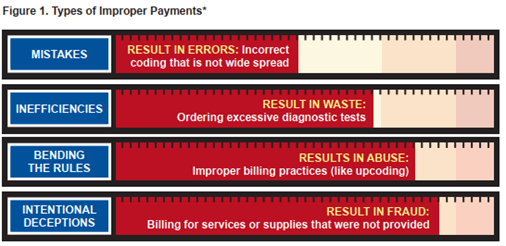
According to the Medicare Integrity Program, activities which target various causes of improper payments are items such as those in the chart below.


The government's primary civil tool for addressing healthcare fraud is the False Claims Act (FCA).

  • Most FCA cases are resolved through settlement agreements in which the government alleges fraudulent conduct and the settling parties do not admit liability.
  • Based on the information it gathers in a FCA case, the Office of Inspector General (OIG) assesses the future trustworthiness of the settling parties (which can be individuals or entities) for purposes of deciding whether to exclude them from the Federal healthcare programs or take other action.

The OIG's efforts to curb fraud include:

  • Conducting criminal, civil, and administrative investigations of fraud and misconduct related to HHS programs, operations and beneficiaries;
  • Using state-of-the-art tools and technology in investigations and audits around the country;
  • Imposing program exclusions and civil monetary penalties on health care providers because of criminal conduct such as fraud or other wrongdoing;
  • Negotiating global settlements in cases arising under the civil False Claims Act, developing and monitoring corporate integrity agreements, and developing compliance program guidance.

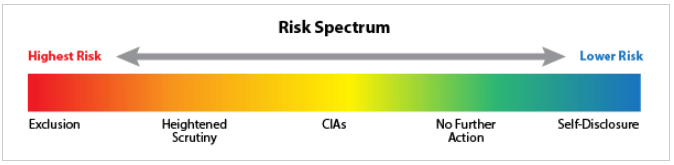
Because OIG's assessment of the risk posed by a FCA defendant may be relevant to various stakeholders, including patients, family members, and healthcare industry professionals, the OIG makes information public about where a FCA defendant falls on the risk spectrum.


The five risk categories on the spectrum are defined below:


Highest Risk:  Exclusion

  • Parties that OIG determines present the highest risk of fraud will be excluded from Federal healthcare programs to protect those programs and their beneficiaries. Excluded individuals and entities are listed in OIG's Exclusions Database.

High-Risk:  Heightened Scrutiny

  • Parties are in the High-Risk category because they pose a significant risk to Federal healthcare programs and beneficiaries. This is because, although OIG determined that these parties needed additional oversight, they refused to enter Corporate Integrity Agreements (CIAs) sufficient to protect Federal healthcare programs. Parties in the High-Risk category that reached settlements since on October 1, 2018, or later are listed here.

Medium risk:  CIAs or Corporate Integrity Agreements

  • Healthcare providers and other entities in the Medium Risk category have signed CIAs with OIG to settle investigations involving Federal healthcare programs. Under these agreements, parties promise to fulfill various obligations in exchange for continuing to participate in the programs.

Lower Risk:  No Further Action

  • The OIG sometimes concludes that parties present a relatively low risk to Federal healthcare programs. As a result, OIG is not seeking to exclude them from those programs or require a CIA. OIG's cases against these parties are closed without evaluating the effectiveness of any efforts the parties have made to ensure future compliance with Federal healthcare program requirements.

Low Risk:  Self-Disclosure

  • A party may disclose evidence of potential fraud related to Federal healthcare programs to OIG. The OIG believes that doing so in good faith and cooperating with OIG's review and resolution process generally demonstrates that the party has an effective compliance program. OIG works to resolve such cases faster, for lower settlement amounts, and with a release from potential exclusion with no CIA or other requirements. More information about OIG's self-disclosure protocol – click here.

This ends Part 3 for the denials and appeals article series. There is so much more to share with you, however, as you can see, filing an appeal involves various considerations and skill sets. Register, train and certify in Appeals Management - Online, On-Demand! 


Read More
Healthcare Revenue Cycle Compliance
Billing/RCM

Part 2: Understanding How Payers Deny Claims

Written by: AIHC Blogger


This article provides educational information related to fighting unreasonable denials by working through a complex payer appeals process. This information is not all-inclusive and the article is a truncated version of Lesson 3 from our Certified Outpatient Clinical Appeals Specialist (COCASSM) training program. The complex Medicare appeals process is used to demonstrate the importance of appealing claims denied in an audit. Make sure to read Part 1: Managing Denials is Important to Good A/R Hygiene.


Audited by a payer?  


Is your organization under a payer audit? Fight back by appealing unreasonable denials. But first, learn more about how a complex payer audit system works. 


Understanding how a payer reviews and makes a payment determination will strengthen your ability to argue and defend your claim upon appeal. The learning objective of this lesson is to help you become familiar with the Medicare Claims Review Program (MCRP). This program monitors inappropriate payments. Other payers mirror Medicare’s program.


What is an “improper” payment?


These are reimbursements that should not have been made or that were made in incorrect amounts. According to the U.S. Government Accountability Office (GAO), improper payments have been estimated to total almost $1.7 trillion government-wide from fiscal years 2003 through 2019. Auditing and denying claims after the claims have been paid is “big money” for the government. 

  • For example, the GAO states that they identified about $77.6 billion in financial benefits in fiscal year 2020—a return of about $114 for every $1 invested.
  • They also identified 1,332 other benefits that led to program and operational improvements across the government.
  • Most recently, GAO has been evaluating the largest response to a national emergency in US history, the $2.6 trillion COVID-19 response legislation, and making recommendations about how to improve its effectiveness in dealing with public health issues and the economy.

The Medicare Fee-for-Service Compliance programs prevent, reduce, and measure improper payments in FFS Medicare through medical review. A number of programs are provided to educate and support Medicare providers in understanding and applying Medicare FFS policies while reducing provider burden.


A Medicare contractor may use any relevant information they deem necessary to make a prepayment or post-payment claim review determination. This includes any documentation submitted with the claim or through an additional documentation request.


CMS' Center for Program Integrity (CPI) oversees Medicare medical review contractors. CPI conducts contractor oversight activities such as:

  • Providing broad direction on medical review policy
  • Reviewing and approving Medicare contractors' annual medical review strategies
  • Facilitating Medicare contractors' implementation of recently enacted Medicare legislation
  • Facilitating compliance with current regulations
  • Ensuring Medicare contractors' performance of CMS operating instructions
  • Conducting continuous monitoring and evaluation of Medicare Contractors' performance in accord with CMS program instructions as well as contractors' strategies and goals
  • Providing ongoing feedback and consultation to contractors regarding Medicare program and medical review issues

The Medicare Claims Review Program, or “MCRP,” involves both technical and clinical categories of denials performed by CMS contractors. It is a complex system, perfect to use as a teaching example! There are two categories of denials:


1. Technical Denial & Rejection
     • This topic has been covered in previous lessons, but let’s review again!

o A technical denial is an error made when filing the claim, such as lack of appropriate coordination of benefits and filing to secondary insurance first. When a critical error gets through the scrubber, the insurance payer software may reject the claim due an error. Correcting these types of errors quickly and refiling the claim typically results in payment. These claims often “fall through the cracks” and can be suspended. Lack of tending to rejected claims can cause huge revenue loss for your organization.


2. Clinical Denial
    • A clinical denial is the denial of payment by an insurance payor on the basis of medical necessity, length of stay or level of care. Special review of documentation, payer guidelines and often appealing the claim is required to obtain payment.

o When a payer sends an RFI (Request for Information), the payer is auditing the claim data against medical record documentation.
o Untimely response to the RFI will result in a denial.
o Sending inappropriate or wrong information to the payer will result in a denial.
o These types of denials can potentially trigger a larger audit, a probe, or an abuse or fraud investigation of your organization


CMS estimates the Medicare FFS improper payment rate through the Comprehensive Error Rate Testing (CERT) program. Each year, the CERT program reviews a statistically valid stratified random sample of Medicare FFS claims to determine if they were paid properly under Medicare coverage, coding, and payment rules.


Audits or claim reviews are conducted either prepayment or post-payment of the claim and typically fall under one of these categories:

  • Compliance to bundling edits (Medicare’s National Correct Coding Initiative or NCCI Edits)
  • Medically Unlikely Edits or “MUEs”
  • Comprehensive Error Rate Testing (CERT)
  • Recovery Audit Program
  • Medical Reviews (MRs)

National Correct Coding Initiative (NCCI) Edits


CMS developed the National Correct Coding Initiative (NCCI) to promote national correct coding methodologies and to control improper coding leading to inappropriate payment in Part B claims. The Centers for Medicare & Medicaid Services (CMS) owns the NCCI program and is responsible for all decisions regarding its contents.


Most payers either use the NCCI edits or have a similar bundling edit system in place. Basically, bundling edits review codes on a claim to determine whether the items can be filed and paid separately or bundled into one code.


The claims scrubber software within your practice management system will analyze the codes on the claim and compare the information to the NCCI edits. Items that should be bundled will be suspended for further review. Your office cannot bill a patient for a service denied due to denied claims based on the NCCI edits.


These edits are updated at least quarterly and revised in your practice management system through updates to the software. Information about the National Correct Coding Initiative (NCCI) can be found in the Internet-Only Manual, Publication 100-04, Section 20.9 of Chapter 23 of the Medicare Claims Processing Manual.


When appealing NCCI edit denials, it is important to review the claim to ensure the appropriate modifier has been used. If not, review the documentation and appropriately append the modifier to the line item on the claim and submit your appeal with the documentation. 


Modifiers allowed with the National Correct Coding Initiative (NCCI) procedure to procedure (PTP) edit that can be used under appropriate clinical circumstances to bypass an NCCI PTP edit include:

  • Anatomic modifiers: E1-E4, FA, F1-F9, TA, T1-T9, LT, RT, LC, LD, RC, LM, RI
  • Global surgery modifiers: 24, 25, 57, 58, 78, 79
  • Other modifiers: 27, 59, 91, XE, XS, XP, XU

NOTE:  Overuse of such modifiers just to get claims passed through the edits for payment can trigger an audit, probe or investigation. 


Medically Unlikely Edit (MUE)


This audit feature analyzes a claim to determine if the appropriate number of units are being reported per line item. It is a unit of service edit for a Healthcare Common Procedure Coding System (HCPCS)/Current Procedural Terminology (CPT) code for services rendered by a single provider/supplier to a single beneficiary on the same date of service (DOS).


The ideal MUE is the maximum unit of service that would be reported for a HCPCS/CPT code on the vast majority of appropriately reported claims. 


MUEs are designed to reduce errors due to clerical entries and incorrect coding. MUEs are adjudicated either as claim line edits or DOS edits.

  • If the MUE is a claim line edit, each line of a claim is adjudicated against the MUE value for the Healthcare Common Procedure Coding System (HCPCS)/Current Procedural Terminology (CPT) code on that claim line.
  • If the UOS on the claim line exceeds the MUE value, all UOS for that claim line are denied. If the same code is reported on more than one line of a claim by using CPT modifiers, each line of the claim is adjudicated separately against the MUE value of the code on that claim line.

For Medically Unlikely Edits (MUEs) that are adjudicated as claim line edits, each line of a claim is adjudicated separately against the MUE value for the code on that line. The appropriate use of Healthcare Common Procedure Coding System (HCPCS)/Current Procedural Terminology (CPT) modifiers to report the same code on separate lines of a claim will enable a provider/supplier to report medically reasonable and necessary UOS in excess of an MUE value.


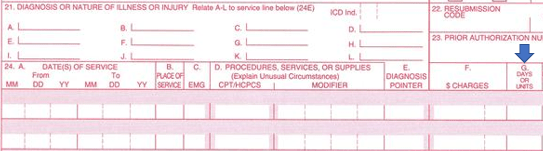
24.G is the field on the 1500 claim being audited for MUE compliance:


These edits are updated at least quarterly and revised in your practice management system through updates to the software. 


Comprehensive Error Rate Testing (CERT) Program


CERT contractors perform a complex medical review of the claim and the supporting documentation to determine whether the claim was paid appropriately according to Medicare coverage, payment, coding, and billing rules.


CMS calculates a national Medicare Fee-For-Service (FFS) improper payment rate and improper payment rates by service type to accurately measure the performance of the MACs and gain insight into the causes of errors. CMS publishes the results of these reviews annually.


The Medicare FFS Improper Payment Rate is a good indicator of how claim errors in the Medicare FFS Program impact the Medicare Trust Fund. CERT errors are listed by the following categories:


The Recovery Audit Program


Most hospitals and clinics are familiar with the “RAC” or Recovery Audit Contractor program – now referred to as the “Recovery Audit Program” by CMS.


RAC's review claims on a post-payment basis by auditing past Medicare FFS claim data for potential overpayments or underpayments and reviewing medical records when necessary to make appropriate determinations. When performing these reviews, Recovery Auditors follow Medicare regulations, billing instructions, National Coverage Determinations (NCDs), coverage provisions, and the respective MAC’s Local Coverage Determinations (LCDs). Recovery Auditors do not develop or apply their own coverage, payment, or billing policies.


In general, Recovery Auditors do not review a claim previously reviewed by another entity. Recovery Auditors analyze claim data using their proprietary software to identify claims that clearly or likely contain improper payments.


Medical Review Audits


Medical reviews identify errors through claims analysis and/or medical record review activities. Contractors use this information to help ensure they provide proper Medicare payments (and recover any improper payments if the claim was already paid). Contractors also provide education to help ensure future compliance.


A Medicare contractor may use any relevant information they deem necessary to make a prepayment or post-payment claim review determination. This includes any documentation submitted with the claim or through an additional documentation request. 


One of the first items reviewed is a valid authentication or signature. Next, auditors typically review documentation for medical necessity; information to support units, laterality, diagnosis coding and supporting documentation such as signed orders or plan of care.


Learn more about clean claims, prompt pay laws, fighting denials based on medical necessity, appealing ERISA denials, the Medicare appeals process, and how to create an effective denials and appeals program – click here and become an Outpatient Clinical Appeals Specialist. Click Here to see if we have any upcoming classroom training camps!

Read More
Healthcare Revenue Cycle Compliance
Billing/RCM

Part 1: Managing Denials Is Important to Good A/R Hygiene

Written by: AIHC Blogger


Too many denied claims to manage? Practicing good revenue cycle management “hygiene” is important – but most don’t know where to start.


This article provides a basic overview of the importance of improving your appeals process to get denials overturned as it relates to overall revenue cycle management. This information is not all-inclusive and is for educational purposes only. We recommend formal training in denials and appeals management and encourage medical billing companies and practice managers gain better insight into accounts receivable (A/R) management through online training and certification.


Revenue cycle management includes tracking claims, making sure payment is received, and following up on denied claims to maximize revenue generation. Several metrics can help you determine whether your revenue management cycle processes are efficient and effective. The first metric is days in accounts receivable (A/R). Days in A/R refers to the average number of days it takes a practice to collect payments due. The lower the number, the faster the practice is obtaining payment, on average.


When a large number of denials are due to a single payer and in a short amount of time, conduct analysis of the situation quickly. Why? This could be an investigation initiated by the payer and may warrant additional assistance to evaluate. You need to know there is a problem and understand the underlying cause before you can resolve it.


According to the American Academy of Family Physicians (AAFP), a 5% to 10% denial rate is the industry average, but keeping the denial rate below 5% is more desirable. Automated processes can help ensure your practice has lower denial rates and healthy cash flow. For most practices, days in A/R should stay below 50 days at minimum; however, 30 to 40 days is preferable and achievable when your revenue cycle team works smart!


Know Your “Days in A/R”


When claims are filed but not paid, days in accounts receivable (A/R) will be higher than your internal historical benchmarks and likely higher than the industry standard for your type of specialty or practice. High days in A/R, or when receivables older than 120 days is greater than 12%, should trigger a signal that improvement is needed – fast! Most of the time improvement in the appeals process is required to avoid writing-off denied claims.


To get the most accurate picture of your practice’s financial standing, base your calculations on the actual age of the claim, i.e., the date of service, not the date on which the claim was filed or when it changes hands from one financially responsible party to another (primary insurance to secondary insurance; insurance to patient). This may mean contacting your vendor to adjust settings in your practice management system to create more meaningful A/R management reports.


How often does your Revenue Cycle Manager (RCM) run a credit balance report? Reconciling accounts with credit balances is the first step toward achieving maximum A/R hygiene. Credit balances are often a neglected aspect of the revenue cycle that can have serious negative effects. Credit balances left unattended can very quickly accumulate to a volume that impacts your accounts receivable reporting and may put your facility at risk for violating federal regulations or your insurance contracts. If your accounts receivable (A/R) reports include credit balances, your A/R will appear better than it actually is as the credits will offset balances due.


Next, calculate the practice’s average daily charges. Add all of the charges posted for a given period (e.g., 3 months, 6 months, 12 months). Then, subtract all credits received from the total number of charges. Next, divide the total charges, less credits received, by the total number of days in the selected period (e.g., 30 days, 90 days, 120 days, etc.). Next, calculate the days in A/R by dividing the total receivables by the average daily charges.


Review Aging Reports


Calculate A/R greater than 120 days using the oldest “buckets” in your aging report to determine how much and from what payers remains unpaid from the date of service to now. To calculate, divide the dollar amount of accounts receivable that is greater than 120 days by the dollar amount of total current accounts receivable, then multiply by 100.


Monitor Reports for Inappropriate Write-Offs


Are accounts reconciled and overpayments identified and handled properly? After careful review, are there adjustments made to accounts that have no paper trail or explanation posted on the account? Are there mistakes made with auto (or manual) posting of contractual adjustments? When your practice fails to distinguish between noncontractual adjustments and contractual adjustments, results may provide a misleading view of how well your practice collects the money it has earned. It can also be a sign of potential embezzlement. Categorizing noncontractual adjustments (e.g., “untimely claims filing” or “failure to obtain prior authorizations”), will help reveal sources of errors and identify opportunities to improve revenue cycle performance.


Managing the issues listed above should come first. Then, move on to calculating and improving your denial rate.


Know Your Claims Denial Rate


The denial rate represents the percentage of claims denied by payers during a given period. This metric quantifies the effectiveness of your revenue cycle management processes. A low denial rate indicates cash flow is healthy and fewer staff members are needed to maintain that cash flow.


A 5% to 10% denial rate is the industry average; keeping the denial rate below 5% is more desirable. Automated processes can help ensure your practice has lower denial rates and healthy cash flow.


To calculate your practice’s denial rate, add the total dollar amount of claims denied by payers within a given period and divide by the total dollar amount of claims submitted within the given period.


The lower the denial rate, the fewer revenue cycle workforce members are needed to manage receivables.


Analyze Denials Data


Root cause analysis or RCA may be helpful for your organization to avoid the “band aid” approach and resolve underlying contributing factors, such as inaccurate coding, documentation and/or billing practices. Revenue Cycle Managers are encouraged to obtain some training in compliance auditing. A good program should include basics in RCA and statistical analysis.


Use the Pareto Principle – the “80/20 Rule” to get organized and maximize revenue!


The 80/20 Rule means that in anything, a few (20 percent) are vital and many (80 percent) are trivial. Project Managers know that 20 percent of the work (the first 10 percent and the last 10 percent) consume 80 percent of your time and resources. You can apply the 80/20 Rule to almost anything, from the science of management to the physical world. The value of the Pareto Principle for a manager is that it reminds you to focus on the 20 percent that matters.


According to the Pareto Principle, of the things achieved during your day, only 20 percent really matter. Those 20 percent produce 80 percent of your results. Identify and focus on those things.


Don't just "work smart," work smart on the right things. It applies to denials management as follows:


The insurance companies you bill most – the top 20 percent of your payers are likely to contribute 80% of all insurance revenue. Focus on denials of those top 20 percent when starting your push-back appeals management program.

  • Take the denials representing those top payers; you are likely to find that 20 percent of those claims constitute 80 percent of the total dollar amount represented in the denial “stack.” Focus on those first.
  • Working the most commonly denied claims representing the higher dollar amounts FIRST with the objective of appealing before the deadline must be your goal.
  • If you must write-off denied claim balances in your system due to passing the appeal deadline, let it be the lower dollar amounts from payers you do not file frequently. This is not to say that these denials are less important, but decisions need to be made where to place energy and focus when resources are limited.
  • Track the amount or volume of write-off adjustments to request additional resources when warranted.

Be persistent, follow through and don’t back down when you know payment from insurance is warranted. Always keep track of problematic areas by payer. Create quarterly reports to analyze the number and type of denials per payer to check for “trends.” Meet with your provider relations representative, when possible, to discuss problem areas. Do not be afraid to take the appeal to the highest level allowed. Make your point with the insurance company in a professional manner. Be persistent and never back down when you know you are right.  


Remember:  An effective appeals management program, over time, will require fewer resources because the insurance companies are denying fewer claims. 


Learn more about clean claims, prompt pay laws, fighting denials based on medical necessity, appealing ERISA denials, the Medicare appeals process, and how to create an effective denials and appeals program – click here and become an Outpatient Clinical Appeals Specialist. Click Here to see if we have any upcoming classroom training camps!

Read More